University of Nebraska Medical Center at 42nd and Dodge, the University of Nebraska Omaha on the south edge of the Aksarben corridor, Creighton University along California Street in Midtown — Omaha's university campuses represent a large and diverse commercial roof inventory, from 1920s brick academic buildings to 2022 research towers, each with its own procurement process, occupancy constraints, and capital planning cycle.
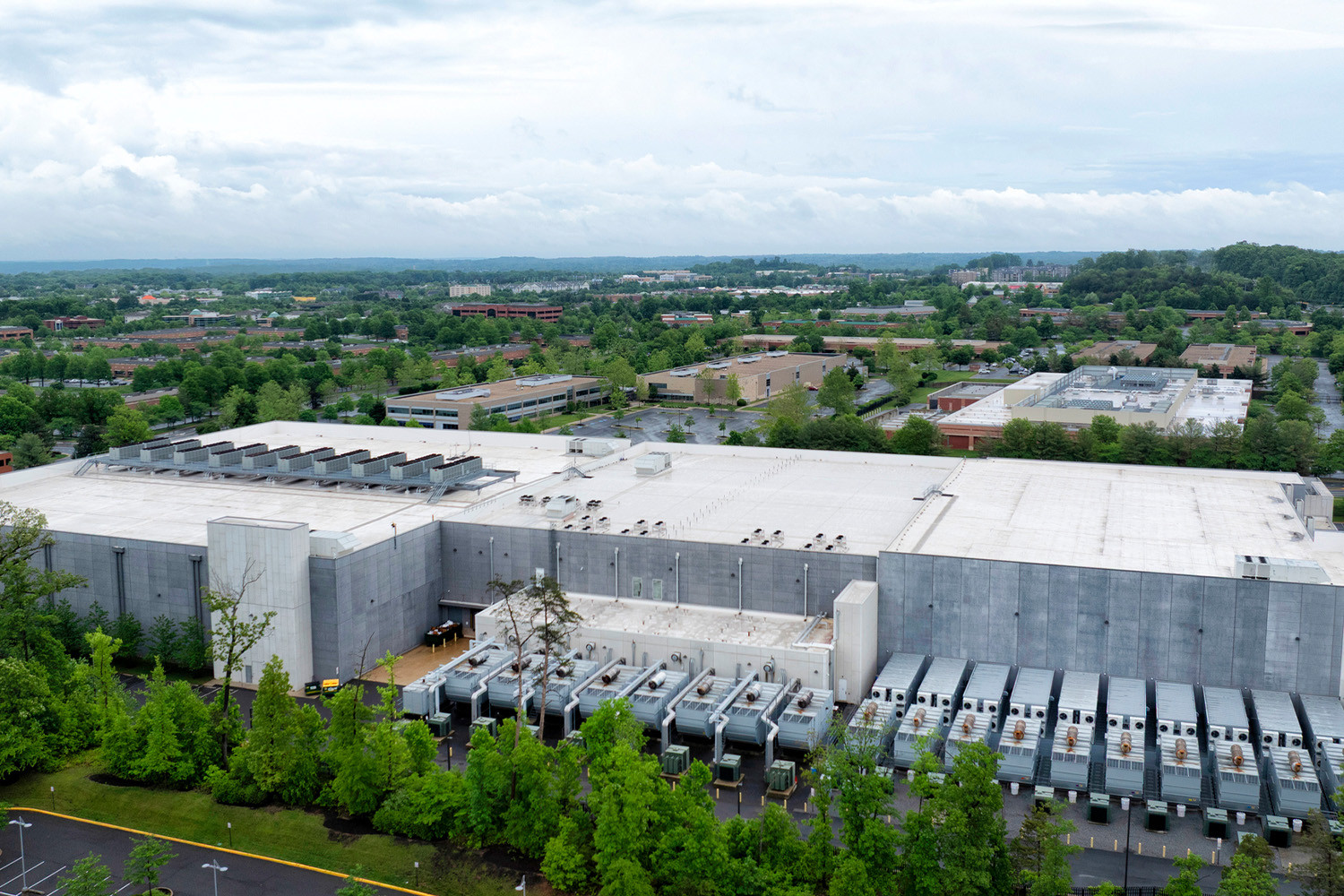
Omaha punches well above its weight class in the national data center market. Union Pacific Railroad, headquartered here, operates one of the most extensive and sophisticated logistics IT platforms in North America, tracking hundreds of thousands of freight cars and containers across a network spanning the continent. The computing infrastructure supporting that operation runs continuously, and the facilities housing it must maintain the kind of availability that a Tier III or Tier IV data center specification demands. Union Pacific's presence anchors a data center ecosystem that also includes Mutual of Omaha's substantial computing campus and Fiserv's Omaha operations, making this one of the more concentrated financial and logistics computing markets in the central US.
The University of Nebraska's high-performance computing infrastructure rounds out Omaha's data center landscape, supporting research workloads that require sustained computational power and the reliable power and cooling infrastructure that advanced research demands. University data centers are often older facilities that have been incrementally upgraded, and their roofing systems sometimes reflect that history — original assemblies from multiple decades ago patched and recovered rather than replaced, with all the hidden moisture damage and compromised insulation performance that multi-layer assemblies can conceal. Re-roofing decisions on these facilities benefit from thorough investigative demolition to understand what is actually beneath the current surface before new materials are specified.
Omaha's climate occupies a challenging middle ground between the extreme cold of the northern plains and the heat and humidity of the Gulf South. Winters bring cold enough temperatures for significant freeze-thaw cycling stress on roofing materials, while summers combine heat and humidity in ways that drive vapor through building envelopes and accelerate biological growth on rooftop surfaces. Severe thunderstorm activity, including hail storms, is a regular feature of Nebraska spring and summer weather. Data center facilities here need roof assemblies that perform across this full range of conditions without requiring emergency repairs during the operationally inconvenient moments when severe weather strikes.
Hail resistance deserves specific attention in the Omaha roofing specification. Nebraska sits in one of the most active hail corridors in the country, and hailstones large enough to damage roofing membrane and rooftop equipment are not unusual. Many data center operators in this market specify TPO or EPDM with enhanced hail ratings — at minimum FM Global 1-2475-HailClassification Class 4, the highest standard available — as a baseline requirement. Single-ply membranes in standard thicknesses can be punctured by large hail, and punctures in a live data center roof create exactly the kind of emergency situation that facility managers here are working to avoid.
The flat prairie geography that characterizes the Omaha area translates to significant wind exposure. Unlike markets where buildings are somewhat sheltered by terrain or urban density, facilities on the western edge of Omaha face relatively unobstructed wind fetch from the southwest. FM Global wind uplift calculations should account for exposure category B or C depending on the facility's specific location, and attachment systems should be specified accordingly. Mechanically attached systems that are adequate in a sheltered urban environment can be insufficient in Omaha's more exposed locations — a consideration that matters especially for the large-footprint data center campuses that characterize the logistics and financial computing facilities here.
Vapor management in Omaha's continental climate requires a seasonal analysis. Summer conditions drive vapor upward from the humid exterior into the cooler, data-center-controlled interior, while winter conditions reverse the drive and push vapor from the conditioned interior toward the cold exterior. A vapor retarder system must be positioned and specified to manage both directions of vapor drive — typically a relatively impermeable retarder placed on the warm side of the insulation layer, with careful attention to permeability ratios throughout the assembly. Contractors who apply a single-climate-zone rule of thumb to vapor retarder specification in Omaha's mixed climate will produce assemblies that perform well in one season and poorly in the other.
The rooftop mechanical equipment inventory on Omaha data centers serving financial and logistics clients is typically substantial and growing. As these organizations expand their computing capacity to support digital transformation initiatives, they add servers that generate more heat, requiring additional cooling equipment on the roof. This incremental equipment addition is one of the most common causes of roofing system degradation over time — each new curb penetration is an opportunity for water intrusion if not flashed correctly, and the cumulative weight of additional equipment can exceed the roof structure's design live load if not managed carefully. A good data center roofing contractor will help owners track the cumulative load and penetration history of their roof and advise when a section of the assembly has reached the end of its practical serviceability.
Emergency response capability is a legitimate factor in contractor selection for Omaha data centers. When a severe storm damages a roof on a facility housing financial transaction processing or railroad logistics data, the window for acceptable repair is measured in hours, not days. Contractors who have 24/7 emergency response capability, keep emergency repair materials in local inventory, and have established protocols for rapid response to mission-critical facilities are meaningfully different from those who treat emergency calls as scheduling problems. Before any contract is signed for ongoing maintenance, facility managers should ask specifically about the contractor's emergency response capability and verify it with references from clients who have needed it.
Life cycle cost analysis should drive roofing investment decisions for Omaha data centers rather than first cost alone. A membrane system specified at the lowest cost that meets minimum code requirements will require re-roofing sooner, produce higher maintenance costs over its life, and carry greater risk of failure during the severe weather events that this region produces. The incremental investment in a higher-specification system — thicker membrane, enhanced hail rating, fully adhered attachment, comprehensive penetration management — paid back over a twenty-year service life typically produces a substantially lower total cost of ownership than the minimum-spec alternative, particularly when the cost of a roof failure on a mission-critical facility is factored in.
Omaha's data center market rewards roofing contractors who combine technical expertise with the organizational reliability that mission-critical clients require. The Union Pacific Railroad and Mutual of Omaha facilities that anchor this market have facilities teams with sophisticated requirements, and the contractors who serve them successfully have built the documentation systems, project management capabilities, and quality control processes that large institutional clients expect. For facility managers evaluating roofing contractors in this market, asking to review a sample of project documentation — specifications, inspection reports, warranty registration — is a practical way to assess organizational capability alongside technical competence.
Frequently Asked Questions
What hail resistance rating should I specify for a data center roof in Omaha?
FM Global's SH (Severe Hail) classification, equivalent to Class 4 under UL 2218, is the appropriate baseline for mission-critical facilities in Nebraska's hail corridor. This rating requires the membrane assembly to resist puncture from a two-inch steel ball dropped from twenty feet — simulating the impact energy of large hailstones. Specify this rating for the complete assembly, not just the membrane alone, as the underlying insulation and cover board contribute meaningfully to impact resistance.
How does Omaha's climate affect vapor retarder selection for data center roofing?
Omaha's mixed climate — hot humid summers and cold winters — means that vapor drive reverses seasonally, and a vapor retarder must manage moisture movement in both directions. A Type II vapor retarder (permeance between 0.1 and 1.0 perms) on the warm side of the insulation assembly is the typical recommendation for this climate zone. Avoid highly impermeable retarders, like self-adhering modified bitumen used as a vapor barrier, on both sides of the insulation — trapping moisture in the assembly is more damaging than allowing controlled vapor movement.
Can I add rooftop HVAC equipment without re-engineering the roof?
Not without verification. Each equipment addition changes the load distribution on the roof structure, and the cumulative effect of multiple additions over years can approach or exceed structural design limits. Before adding any significant piece of equipment, have the structural drawings reviewed by an engineer who can confirm the available live load capacity at the proposed location. Also ensure that the new equipment's curb and flashing are coordinated with the existing roof assembly before ordering equipment with a specific curb height or footprint.
How quickly can a damaged data center roof in Omaha be repaired after a severe storm?
A contractor with local emergency inventory and 24/7 response protocols can typically deploy a temporary waterproofing system within hours of a storm event. Permanent repair or replacement follows after weather conditions stabilize. The key is establishing the emergency response relationship before a storm, not trying to source a qualified contractor in the immediate aftermath when demand for emergency roofing services peaks. Ask about emergency response capability specifically when interviewing contractors for maintenance agreements.
What is the typical service life of a quality data center roof in Omaha's climate?
A properly specified and maintained single-ply membrane system — fully adhered TPO or EPDM at 60 mil or greater thickness, with appropriate insulation and properly executed flashings — should achieve twenty to twenty-five years of service life in Omaha's climate. That assumes twice-annual formal inspections, prompt repair of any deficiencies identified, and a maintenance program that includes cleaning membrane surfaces to remove biological growth and inspecting all penetration flashings after severe weather events. Systems that are neglected or that were installed at minimum specification will fall short of that benchmark.
Frequently asked questions
Can you produce a bid document for a Nebraska public university project?
Yes. We produce complete bid specifications for public university roofing projects — membrane type and thickness, insulation specification, fastener pattern design basis, manufacturer warranty requirements, and quality assurance testing protocol. The specification is written to be non-proprietary and compliant with Nebraska public bidding law. We then bid the project against our own specification, which means we know what we wrote and we execute to it.
What are the best months for university roofing work in Omaha?
May through August is the primary window for academic campus work — after spring commencement and before fall move-in. This aligns well with Omaha's roofing weather: June through August avoids the freeze temperatures that limit adhesive application and provides the longest sustained warm-weather window. The limitation is that every other educational contractor is competing for the same window, so early scoping and pre-construction planning — starting in February or March for a May mobilization — is necessary to hold the schedule.
How do you handle roofing on buildings with active research lab floors?
Active research lab floors require the same noise, vibration, and chemical off-gassing coordination as healthcare facilities. We assess the lab's sensitivity profile — what instruments are running, what air pressure requirements apply, what chemicals are in use that would be affected by roofing adhesive vapors — and design the construction approach accordingly. On highly sensitive lab floors, we shift to mechanically attached systems with no solvent-based adhesives, and we schedule mechanical attachment away from active experiment windows.
Scope a university or college roofing project in Omaha.
We will walk the campus buildings, assess condition across the full inventory, and produce bid-ready documentation or a capital planning report depending on your procurement process.
Ready to talk through a roof?
Tell us about the building and the roof problem. We'll document it and put a plan in writing — with an honest repair-vs-replace recommendation and no upsell pressure.