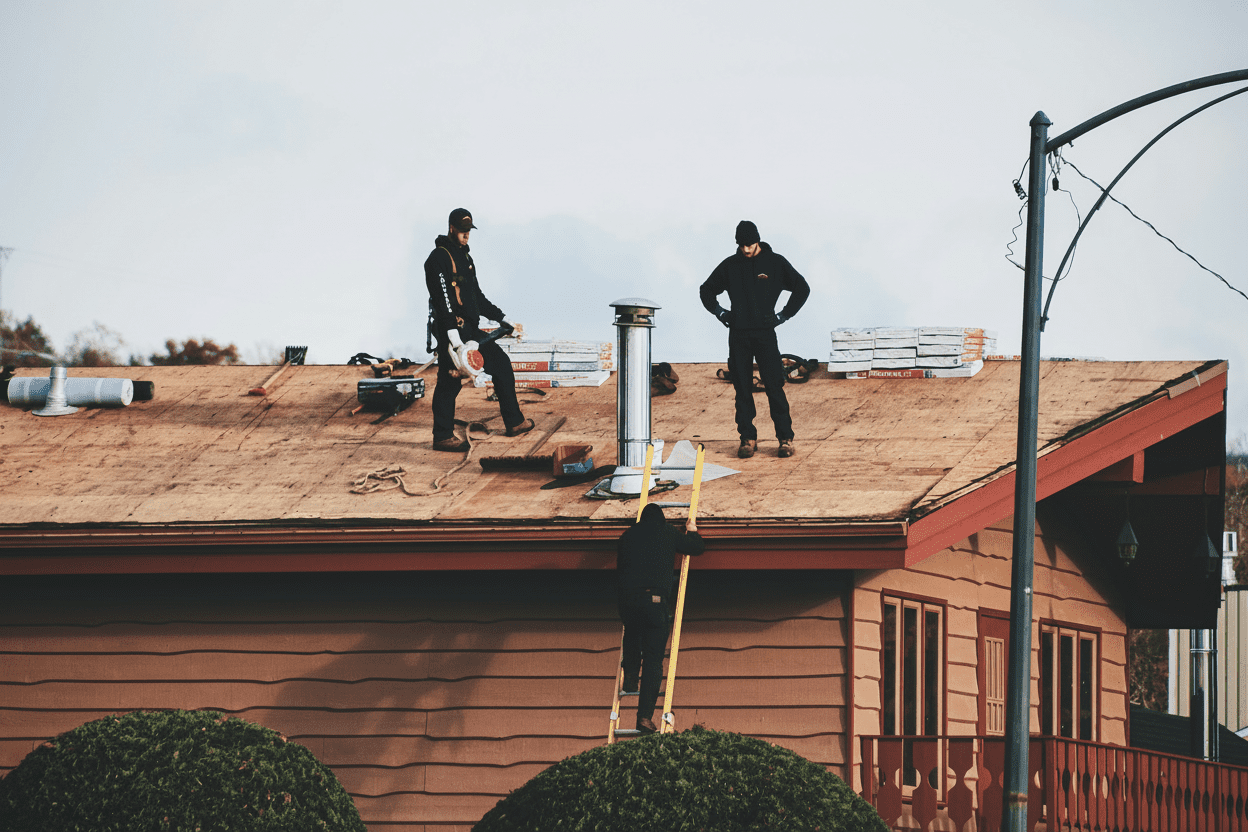
A replacement project scoped before it goes to bid produces better pricing, fewer change orders, and a result that matches the owner's actual capital horizon. We develop written scopes for Omaha commercial roof replacements — system specification, budget range, sequencing, and warranty path — before the first bid goes out.
Most commercial roof replacements in Omaha are scoped one of two ways: the owner calls three contractors when the roof is actively leaking, asks for bids, and picks the lowest number — or the facility manager inherits a building, finds a roof file with no useful information, and guesses at what the roof needs. Both approaches produce predictable results: change orders, scope gaps, undersized warranties, and replacement projects that do not match the building's actual needs or the owner's capital timeline.
We offer roof replacement planning as a standalone service for building owners, facility managers, and capital planning teams who want to scope a replacement project correctly before it goes to bid. The output is a written replacement scope — system specification, attachment method, insulation stack, manufacturer warranty path, closeout documentation requirements, and a budget range tied to current Omaha commercial roofing market conditions. That document becomes the bid basis: all bidders bid the same scope, and the owner evaluates bids on price, not on competing scope interpretations.
The planning engagement starts with a roof walk and condition assessment. We document existing conditions, pull moisture cores where the recover-versus-replace decision is open, and review the building's roof history file if one exists. The written scope comes out of that assessment — it specifies what the replacement needs to accomplish, not just what materials are involved.
What a Written Replacement Scope Includes
System specification: The membrane type and thickness, the attachment method (mechanically attached, fully adhered, or ballasted), the insulation stack and R-value to current Nebraska energy code (IECC 2021, minimum R-25 for low-slope), the cover board specification, the fastener pattern to code wind-uplift for the building's exposure category. West Omaha and Eppley Airfield corridor buildings require different fastener patterns than Downtown Omaha buildings — the exposure category calculation is part of the specification, not an assumption.
Manufacturer warranty path: 20-year NDL (no-dollar-limit) warranty options from TPO and EPDM manufacturers, 25-year options on 80-mil systems, and the maintenance requirements that keep the warranty active after installation. Buildings that want the manufacturer warranty need to know before the bid what inspection and maintenance obligations come with it.
Sequencing plan: The phasing of tear-off and installation, the dry-in plan for each section, the rooftop equipment handling plan, crane and lay-down zone locations, permit requirements with the City of Omaha Development Services or applicable Sarpy County authority, and the tenant notification schedule. For occupied buildings on the Midtown and Downtown Omaha corridors, sequencing can be as important as system specification.
Budget range: An installed-cost range in current Omaha commercial roofing market dollars, segmented by scope component — tear-off and disposal, insulation, membrane, flashings, rooftop equipment handling, permits. Not a guaranteed price — the bids establish the actual price — but a calibrated range that tells the owner whether capital is available before bids go out.
Timing Replacement to the Capital Cycle
Omaha commercial building owners who plan replacements against their capital cycle rather than against the next major leak save money in two ways: they avoid the emergency premium that comes with reactive replacement, and they can time the project to the most favorable bidding conditions. Nebraska's commercial roofing bidding market is most competitive in late winter and early spring, when contractors are scheduling forward production. Projects that go to bid in January and February for April-June execution often produce better pricing than projects that go to bid in June for immediate start.
We help owners identify the planning horizon. A TPO system at year 15 with dry insulation and intact seams has another 5-10 years of service life remaining under documented maintenance — the owner can plan the replacement for the capital cycle that makes sense, not the one dictated by the next leak. A system at year 15 with saturated insulation in 30% of the area and failing flashings at three parapets is a different situation — that building needs a replacement scope now, before the next winter accelerates the damage.
Replacement Planning for Multi-Building Portfolios
Omaha's corporate campus and investment property owners with multiple buildings benefit from a portfolio-level replacement planning approach. We assess each building in the portfolio, rank replacement urgency by condition and remaining service life, and produce a multi-year capital forecast that allows the owner to budget replacements in sequence rather than reacting to failures one building at a time.
Portfolio planning across multiple Omaha buildings also creates negotiating leverage. A contractor bidding on a three-building replacement program over two years is bidding on a relationship, not a transaction — the pricing and the contractor's investment in quality reflect that. We facilitate this for portfolio owners by developing individual building scopes that can be bundled into a program bid or released individually depending on the portfolio's capital situation.
Frequently asked questions
What does a roof replacement planning engagement cost?
We charge for the written scope on planning-only engagements — the fee is applied against the project cost if we are awarded the replacement. For buildings we inspect as part of an active replacement bid, the inspection and written scope are part of the bid process at no additional charge. Call us at (402-258-5343 to discuss which approach fits your situation.
How detailed is the written scope you produce?
Detailed enough to bid against. The specification names the membrane type and thickness, the attachment method, the insulation specification with R-value, the manufacturer warranty path and term, the fastener pattern design basis (wind-uplift requirement and exposure category), the rooftop equipment handling plan, and the closeout documentation requirements. Bidders who receive our scope are bidding the same project — owners compare prices, not competing assumptions.
Can you help us evaluate bids after you produce the scope?
Yes. Bid leveling — comparing bids line by line against the written scope to identify where bidders have taken scope exceptions, specified alternative products, or priced differently — is part of what we offer in a planning engagement. A low bid that specifies 60-mil TPO instead of 80-mil or a 10-year warranty instead of 20-year is not comparable to the other bids without leveling.
Planning a roof replacement for your Omaha building?
We will walk the roof, document the condition, and produce a written scope detailed enough to bid — so you control the replacement process rather than reacting to the next leak.
Ready to talk through a roof?
Tell us about the building and the roof problem. We'll document it and put a plan in writing — with an honest repair-vs-replace recommendation and no upsell pressure.