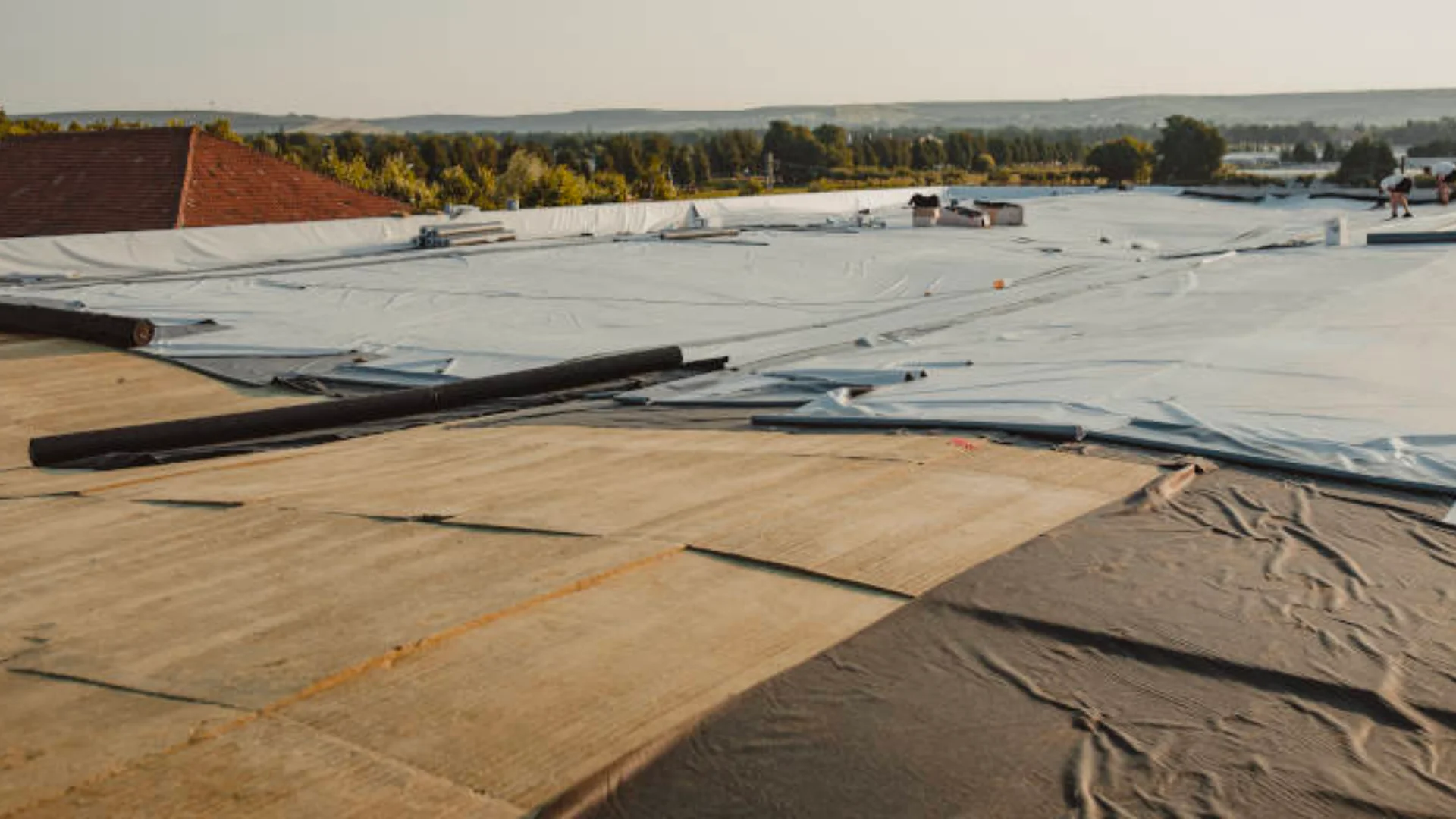
An active commercial roof leak is not a next-week problem. Water moving through a roofing assembly reaches inventory, equipment, electrical systems, and finished ceilings faster than most building owners expect. We mobilize same-day for active leak calls and after-hours for buildings on maintenance contracts.
Emergency roof calls in Omaha cluster around three weather events: convective thunderstorms in June through August, ice storms in January and February, and the episodic severe-weather events — the derecho in August 2020, the tornado outbreaks that move through eastern Nebraska most springs — that create large-scale damage across multiple buildings simultaneously. We have responded to all three, sometimes across a dozen buildings in a single week after a major event.
Our emergency response protocol is straightforward. The call comes in. A project manager asks three questions: What is the system (TPO, EPDM, modified bitumen, BUR)? What is the building use (office, warehouse, medical, food service)? Is there active water intrusion into occupied or sensitive space? The answers determine which crew and which materials go out the door. A food-production facility in the North Omaha industrial zone with active water near electrical panels gets a different response priority than a warehouse with water ponding in an empty bay. We triage honestly.
Temporary dry-in is always the first objective in an emergency. We stop the water from entering the building using tarp systems, peel-and-stick membrane, or emergency flashing repair, depending on the failure type. Once the building is dry, we schedule the permanent repair — which requires proper surface preparation, appropriate membrane installation conditions, and permanent materials rather than emergency stopgap products.
Response Times Across the Omaha Metro
Downtown / Old Market / Midtown: Same-day, typically within 3- office is four blocks from the Old Market warehouse district. We have performed emergency repairs on the ConAgra campus riverfront buildings, on the office buildings flanking the CHI Health Center arena, and on the historic loft conversions in the Old Market that have aging roof assemblies and sensitive tenant interiors below.
UNMC / Nebraska Medicine: Same-day response. The medical campus south of Dodge at 42nd Street runs 24/7 operations on floors where a roof leak can compromise infection-control zones. We coordinate with hospital facilities management on hot-work permits before any torch or heat-weld work, even in an emergency — this is non-negotiable on a medical campus.
Bellevue / Offutt corridor: Next-morning at latest, same-day when crews are available. The commercial corridor near Offutt Air Force Base runs a mix of industrial, medical, and office buildings. Sarpy County permits are filed when the repair exceeds the permit threshold.
Council Bluffs, Iowa: We cross the Missouri River for emergency calls. Council Bluffs commercial buildings — the casino resort complexes on the riverfront, the industrial corridor along I-80, and the neighborhood commercial inventory — are within our active service area. Iowa contractor registration is current.
Storm Event Response — Derechos, Tornadoes, and Ice
The August 10, 2020 Midwest derecho is the benchmark severe weather event for Omaha commercial roofing. Sustained winds above 100 mph, with peak gusts recorded above 110 mph at some locations, drove membrane blow-off on mechanically attached systems where the fastener pattern was undersized for the building's actual wind-exposure category. Distribution buildings near Eppley Airfield took concentrated damage along the Missouri River plain. We mobilized emergency tarping crews on the day of the event and ran repair work for six weeks after — membrane re-installation, parapet rebuilds, equipment reset. The lesson the derecho taught: fastener patterns on West Omaha and river-plain buildings must be designed for Exposure B and C, not for sheltered urban conditions.
Tornado outbreaks in eastern Nebraska — the metro sees tornado watches or warnings most springs, and significant tornadoes have touched down in the Douglas and Sarpy County suburbs within the past decade — produce emergency calls ranging from debris-impact membrane cuts to full roof system displacement on lighter commercial structures. We carry temporary roof frame systems for catastrophic failure situations where tarp alone cannot span the structural damage.
Ice storms are the underappreciated emergency in Omaha. The metro averages one to three significant ice events per winter. Ice loading on flat commercial roofs, combined with frozen drains that prevent melt from escaping, creates rapid ponding cycles as daytime melt refreezes overnight. We have cleared frozen commercial roof drains in sub-zero wind chills on buildings from the North Omaha industrial zone to the Aksarben Village retail district. Getting those drains clear before the next melt cycle is the difference between a service call and structural overstress.
What to Do Before We Arrive
Move anything water-sensitive away from the leak area and photograph the ceiling damage before moving anything — insurance documentation requires before-and-after photos to support the claim, and a tidy ceiling with no evidence of the original damage pattern is harder to document. If water is near electrical panels, lighting, or other live electrical infrastructure, call a licensed electrician before anyone goes near the affected area. Do not attempt to get onto the roof without fall protection — if you do not have a safety harness and anchor system, stay off the roof until our crew arrives.
Call us at (402-258-5343. Have the building address, a description of where the leak is presenting inside the building, and the approximate age of the roof if known. That information lets us load the right materials before we leave the shop.
Frequently asked questions
Do you respond to emergency calls after hours and on weekends?
After-hours and weekend response is available for buildings on our maintenance contracts. For buildings without an active contract, we respond to daytime emergency calls same-day and schedule after-hours calls for the first available morning slot. If you have a large-footprint commercial building with significant roof age, a maintenance contract is the right way to ensure after-hours access.
Will my emergency repair be covered by insurance?
Storm damage — hail punctures, wind blow-off, derecho-related membrane failure — is typically covered under commercial property insurance policies. We provide written damage assessments and photo documentation in the format insurance adjusters require. Normal wear and aging failures are not storm damage and are typically not covered. We will not characterize a maintenance failure as storm damage in our documentation — that creates claims problems you do not want.
What is the difference between your emergency tarping and a permanent repair?
A tarp or emergency membrane patch stops water from entering the building. It is not a permanent fix. The temporary repair is designed to survive weather events for 30-90 days while the permanent repair is scoped, permitted (if required), and scheduled with the right materials and conditions. We always follow up on emergency dry-in calls with a written scope for the permanent repair.
Active leak on your Omaha commercial roof?
Call us at (402-258-5343 right now. Same-day dispatch for active commercial roof emergencies across the Omaha metro.
Ready to talk through a roof?
Tell us about the building and the roof problem. We'll document it and put a plan in writing — with an honest repair-vs-replace recommendation and no upsell pressure.