Roof Systems
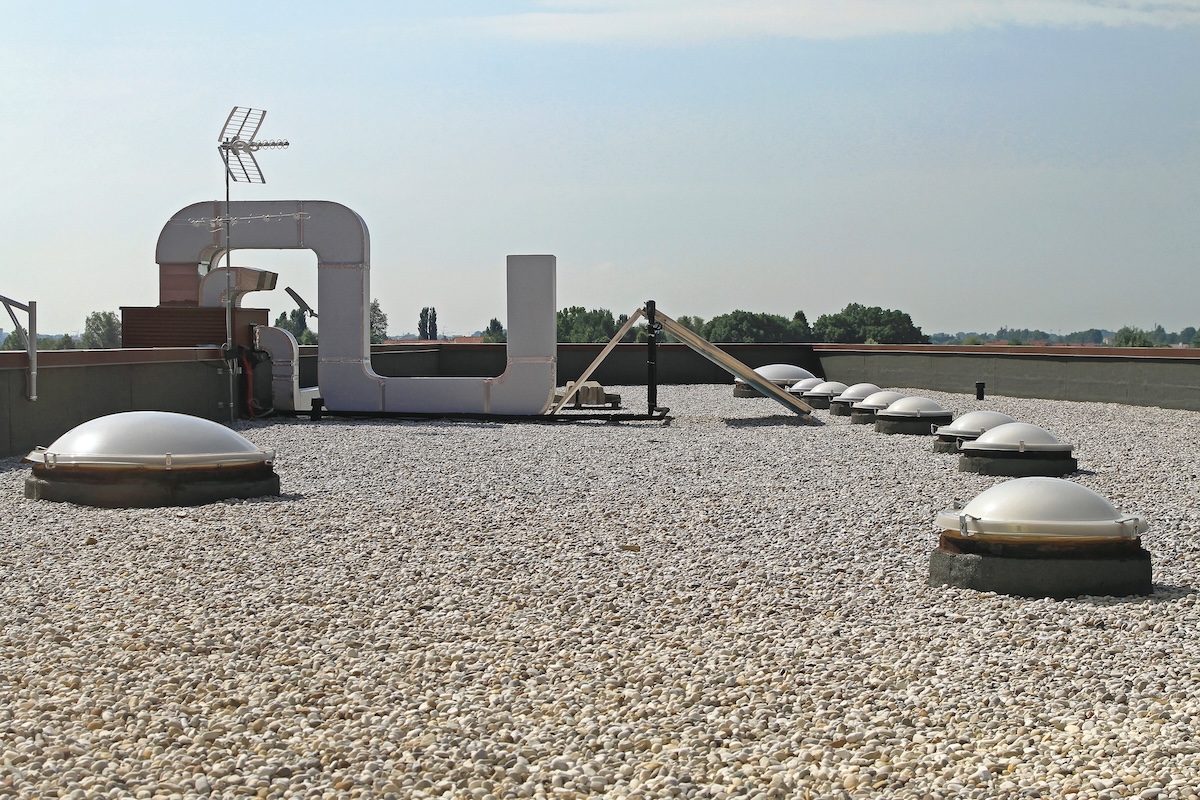
Most of Omaha's pre-1980 commercial inventory runs built-up roofing — four-ply asphalt-saturated felt systems with a flood coat and aggregate surface. We assess, recover, and replace BUR on the Downtown core, the Old Market warehouse district, and the aging Midtown commercial buildings that make up a significant share of Douglas County's flat-roof stock.
Built-up roofing is the roof system under most of the buildings in Omaha's pre-1980 commercial inventory. The Downtown core, the Old Market warehouse district, the Midtown corridors along Farnam, Harney, and Douglas Streets — these buildings were built on four-ply or three-ply felt-and-asphalt systems that are now decades past their original design life. Many have been patched, re-surfaced, and recovered multiple times. We see them in two conditions: buildings that have been maintained and still have recoverable decks with mostly-dry insulation, and buildings that have been neglected and have saturated insulation, corroded metal deck, and alligatored asphalt that has lost all remaining life.
The assessment is the first step on every BUR project we touch. We pull moisture cores in a grid pattern — more cores on larger roofs, denser core spacing near known problem areas like drains, penetrations, and prior patch locations. We pull deck inspection ports under wet-core locations to assess deck condition. A corroded metal deck or rotted plywood under saturated insulation changes the project from recover to full structural replacement, which changes the budget and the permit scope significantly. Building owners need to know this before a contract is signed, not when the crew opens the roof.
Call us at 555-555-. BUR assessment, recover planning, and full replacement are the three scopes we deliver in writing after a roof walk — with moisture-core data, deck inspection photos, and a capital estimate that holds up when the project goes to bid.
BUR Conditions We Find on Omaha's Pre-1980 Inventory
Alligatored asphalt is the most common surface condition on Omaha BUR past its service life. The asphalt flood coat oxidizes over decades of UV exposure and Nebraska's extreme thermal cycling — surfaces crack in the pattern that gives alligatoring its name. Alligatored asphalt no longer seals at cracks or flashings, and water infiltrates every crack during the first rain. Once water reaches the felt plies, freeze-thaw cycling expands it and forces the plies apart. The alligatoring surface is a late-stage indicator — insulation saturation usually precedes visible surface alligatoring by several years.
Blister formation is the second condition. Blisters are pockets of gas or vapor trapped between felt plies that expand and lift the membrane in localized domes. They form when moisture is present between plies during installation or when moisture infiltrates a small opening and vaporizes under the high summer surface temperatures. In Omaha, where BUR surface temperatures exceed 150°F on July afternoons, blisters can grow rapidly. A blister that is punctured or abraded exposes the felt ply below to direct water infiltration.
Aggregate displacement is the third. The gravel ballast on a flood-coat-and-aggregate BUR surface migrates to low areas and drains over time — Omaha's freeze-thaw cycling accelerates this by heaving the aggregate repeatedly each winter. Aggregate-free areas of the membrane are exposed to direct UV oxidation, which attacks the asphalt flood coat and reduces the remaining service life from years to months in exposed zones.
Recover vs. Replace — The BUR Decision in Omaha
The recover decision on a BUR system depends on two variables: insulation moisture content and deck condition. We pull moisture cores in a representative grid — five to ten cores on a typical Omaha commercial building, more on larger or complex roofs. If more than 25% of cores read wet, recovering over saturated insulation voids the new system's manufacturer warranty and traps the moisture that will eventually cause the new system to fail. In that case, full replacement of the membrane and affected insulation is the honest scope.
Deck condition is assessed at every wet-core location by pulling a 4-inch inspection port through the insulation. Corroded metal deck — common on the 1960s-70s buildings in the Old Market and Downtown core where moisture has been infiltrating for years — requires deck replacement before any new system can be installed. We document deck condition photographically at every inspection port and include the photos in the written condition report.
When the recover path is clear — dry insulation, sound deck, and less than 25% wet cores — we typically specify a two-ply SBS modified bitumen recover over a new polyiso insulation layer. This gives the building a 15-20 year warranted recover and brings the insulation stack closer to current Nebraska energy code R-value requirements. The recover costs roughly 40-60% of a full replacement, making it the preferred capital path when the existing assembly supports it.
BUR and Freeze-Thaw Cycling in the Omaha Climate
Nebraska's 50-70 freeze-thaw events per winter are more destructive to BUR than to single-ply systems because BUR is a multi-layer assembly where moisture can infiltrate between plies and freeze. A crack in the asphalt flood coat admits water, which migrates between felt plies and then freezes in the ply interface. Ice expansion forces the plies apart — opening the crack further and admitting more water in the next freeze-thaw cycle. This self-reinforcing failure mode means BUR damage in Omaha accelerates rapidly once water enters the assembly.
The derecho record is also relevant for BUR. The August 2020 derecho's 110+ mph winds lifted gravel ballast and drove it against parapet faces, HVAC curbs, and rooftop equipment. Buildings with BUR and aggregate ballast lost aggregate from large areas of the roof surface in that event — exposing asphalt flood coat that was already near end of life. We documented six Omaha commercial buildings where the derecho accelerated existing BUR deterioration to the point where immediate replacement was needed rather than the recover that would have been the right call the following spring.
Parapet and coping details are the most critical failure points on Omaha BUR. The BUR base flashing at a parapet must be embedded under the coping metal and sealed against thermal movement. Omaha's thermal range causes the coping metal to move relative to the parapet masonry — every winter, the coping contracts; every summer, it expands. A base flashing that is not detailed for this movement cracks at the coping-to-base-flashing joint within five to ten years, creating the water entry point that eventually saturates the insulation below.
Frequently asked questions
How do you decide if a BUR needs replacement vs. recover?
Moisture core results and deck condition. We pull cores in a representative grid and assess every wet-core location with a deck inspection port. Over 25% wet cores means recover is not a warranted option — replacement is the scope. Sound deck with under 25% wet cores means recover is viable, and we specify the recover system, insulation layer, and warranty path in writing. You get the core data and deck photos in the report, not just a recommendation.
Is BUR still installed new on Omaha buildings?
Rarely. New BUR installation is uncommon in Omaha today — single-ply TPO, EPDM, and PVC have largely replaced it for new construction because of faster installation speed, better warranty paths, and lower labor cost. We see BUR specified occasionally for high-traffic industrial buildings where the multi-layer redundancy is a design requirement, or for buildings where the owner's spec calls for a legacy system to match the existing assembly on an addition or expansion. We install BUR when it is the right system for the building — we also tell you when it is not.
What does a BUR replacement cost compared to TPO on an Omaha building?
New BUR installation costs more than TPO per square installed because of the labor involved in building up multiple felt plies with hot asphalt or cold adhesive. A full BUR replacement on a 20,000 square foot Omaha commercial building typically costs 20-35% more than a 60-mil TPO replacement of equivalent insulation spec. The cost difference narrows when the BUR includes a standing-seam metal cap sheet or a granule-surfaced cap sheet that extends the maintenance interval.
Aging BUR on an Omaha commercial building?
We will walk the roof, pull moisture cores, assess deck condition at wet-core locations, and deliver a written recover-vs-replace scope with capital cost estimates.
Ready to talk through a roof?
Tell us about the building and the roof problem. We'll document it and put a plan in writing — with an honest repair-vs-replace recommendation and no upsell pressure.