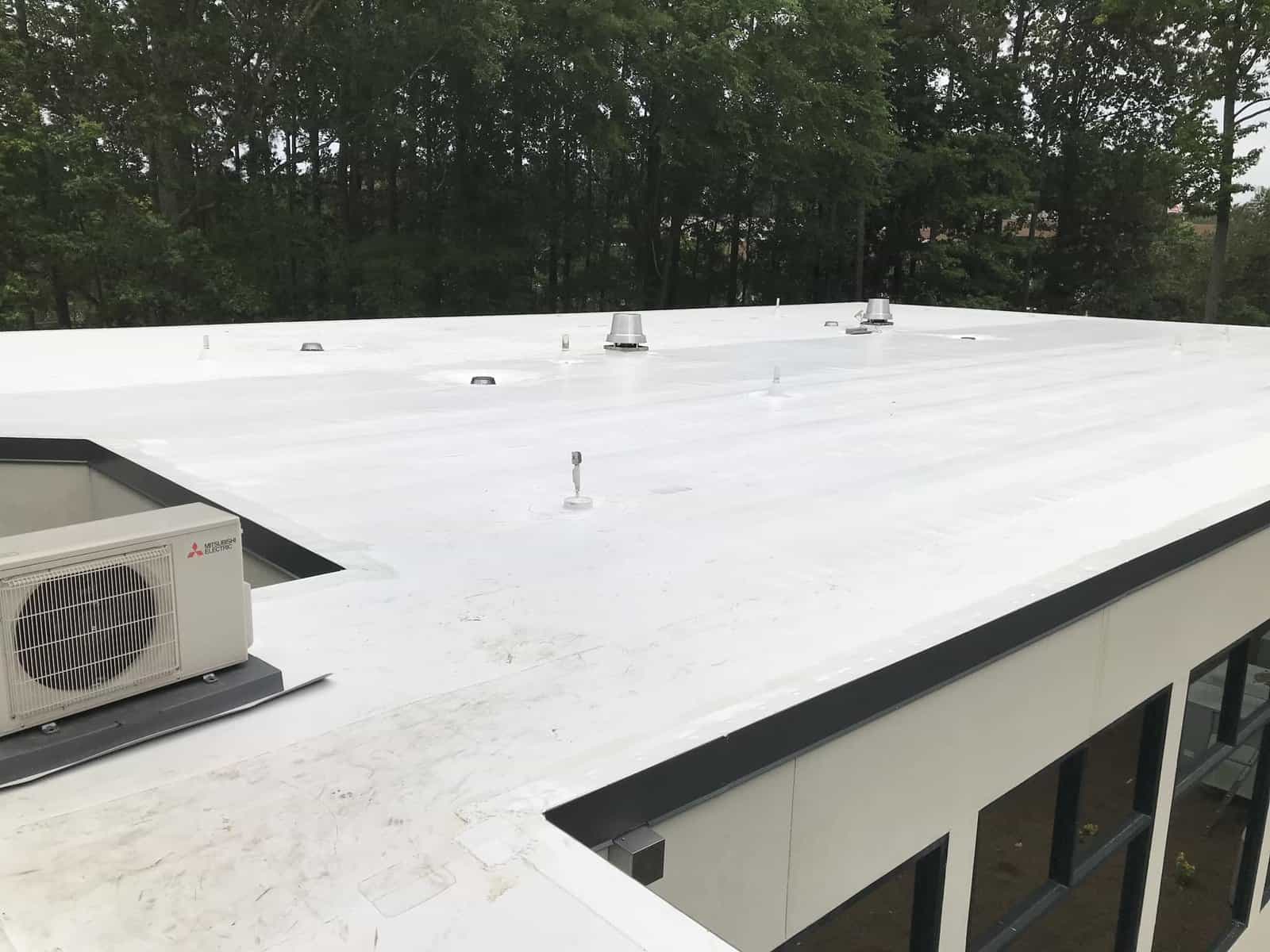
What the Inspection Covers
Field membrane: We walk every accessible section of the field membrane looking for punctures, blisters, splits, lap seam condition, surface erosion, ponding patterns, and UV degradation. On older TPO systems at buildings along the 72nd Street corridor or the Dodge Street office district, we note seam probe results — we run a test wheel on every linear foot of accessible seam on roofs we suspect have marginal weld quality.
Flashings and terminations: Parapet flashings, counterflashings at curbs and penetrations, pitch-pocket condition, edge metal terminations, and coping cap attachment are all documented. Omaha's freeze-thaw cycling — 50 to 70 events per year — is hardest on terminations. A parapet flashing that looked acceptable in October may be cracked open by March. We document condition with photos and note which terminations are within one or two seasons of failure.
Drains and drainage: Every drain, scupper, and overflow drain is located, photographed, and noted for blockage, flashing condition, and adequate flow capacity. Ponding water in the Omaha climate is a compounding problem — summer humidity enters through water-saturated insulation, then freeze-thaw cycling expands the moisture and fractures the insulation matrix.
Penetrations and rooftop equipment: HVAC curbs, exhaust fans, vent pipes, conduit penetrations, and communication equipment bases. The corporate campus buildings along Dodge Street and at the Werner Enterprises complex in West Omaha have dense rooftop mechanical arrays — we photograph and note every penetration's flashing status and the condition of any pitch pockets.
Deck and substrate: Where we can access substrate cores or observe deck condition at existing penetrations, we note corrosion, deflection, or delamination. Visible deck assessment is not the same as a full moisture survey — if the inspection suggests moisture, we recommend infrared scanning as a follow-up.
Inspection Types — Condition, Capital Planning, Pre-Purchase
Condition inspection: The standard annual or biannual walk for buildings on active maintenance programs. Produces a photo-keyed condition report and a priority repair list sorted by urgency. Most commercial buildings across the Omaha metro that hold manufacturer warranties need at least one documented annual inspection to maintain warranty compliance.
Capital planning inspection: A deeper scope for buildings entering a 3-to-10-year capital planning cycle. We include estimated remaining service life for each roof zone, a priority timeline for replacement or major repair, and a rough installed-cost band for each phase. CFOs and asset managers at the Berkshire Hathaway and Mutual of Omaha campus buildings use these reports to build multi-year maintenance and replacement budgets.
Pre-purchase due diligence: Inspection and report for buyers acquiring commercial property in the Omaha market. We scope the report for the buyer's attorney and lender — condition findings, estimated capital spend to bring the roof into good order, and a recommended hold-or-replace timeline. Turnaround on pre-purchase reports is typically five to seven business days from inspection date.
Post-storm inspection: After any significant weather event — the August 10, 2020 derecho, spring hail events in the 1.5-to-2.5-inch range, ice storms, or tornado near-misses — we conduct a storm-specific inspection documented to insurance-grade standards. The report distinguishes pre-existing condition from storm-related damage, which is the key documentation question in any insurance claim.
How We Deliver the Report
The inspection report is delivered as a PDF with an embedded roof zone diagram, a photo log with every photo linked to its zone location, and a written assessment section with conclusions and a prioritized action list. We do not send an email with three photos and a paragraph. The report is structured so it can be filed in the building's permanent roof record — which matters when the next owner or the manufacturer warranty desk asks for service history.
Turnaround is typically three to five business days from the inspection walk. For pre-storm assessment or time-sensitive due diligence, we can produce preliminary findings faster. Emergency post-storm inspection reports are prioritized — we want the documentation in place before repair work begins, because starting repair before the inspection is documented creates the same documentation gap that complicates insurance claims.
Frequently asked questions
How often should a commercial roof in Omaha be inspected?
At minimum, once per year — and twice per year (spring and fall) for buildings on active manufacturer warranties or for roofs with documented drainage problems, aging flashings, or dense rooftop mechanical equipment. Omaha's spring hail season and the winter freeze-thaw cycle are the two highest-risk windows. Inspecting in May catches winter freeze-thaw damage before it becomes an active leak. Inspecting in October catches anything that needs to be addressed before the next freeze cycle.
Does the inspection require shutting down building systems?
No. A standard condition inspection is non-invasive — we walk the roof, observe, photograph, and document. No building systems are shut down. HVAC, solar, and communication systems are inspected in place. If we recommend moisture cores or substrate testing as a follow-up, that work requires a brief core drill at discrete locations — no system shutdown required. At occupied medical buildings on the UNMC campus, we coordinate the roof access with the facility manager's hot-work permit process before the inspection visit.
What is the difference between your inspection and a warranty inspection from the manufacturer?
Manufacturer warranty inspections are conducted by the manufacturer's field representative and are focused on warranty compliance — does the roof Our inspection is focused on building owner interests — what is the actual condition, what needs attention, and what is the capital horizon. We recommend manufacturers' warranty inspections where they are required; our inspection is a separate, owner-oriented document. Both can be scheduled in the same site visit.
Schedule a documented roof inspection for your Omaha building.
Our project managers walk the roof, photograph every condition issue, and deliver a written report within five business days — usable for capital planning, warranty compliance, or insurance documentation.
Ready to talk through a roof?
Tell us about the building and the roof problem. We'll document it and put a plan in writing — with an honest repair-vs-replace recommendation and no upsell pressure.