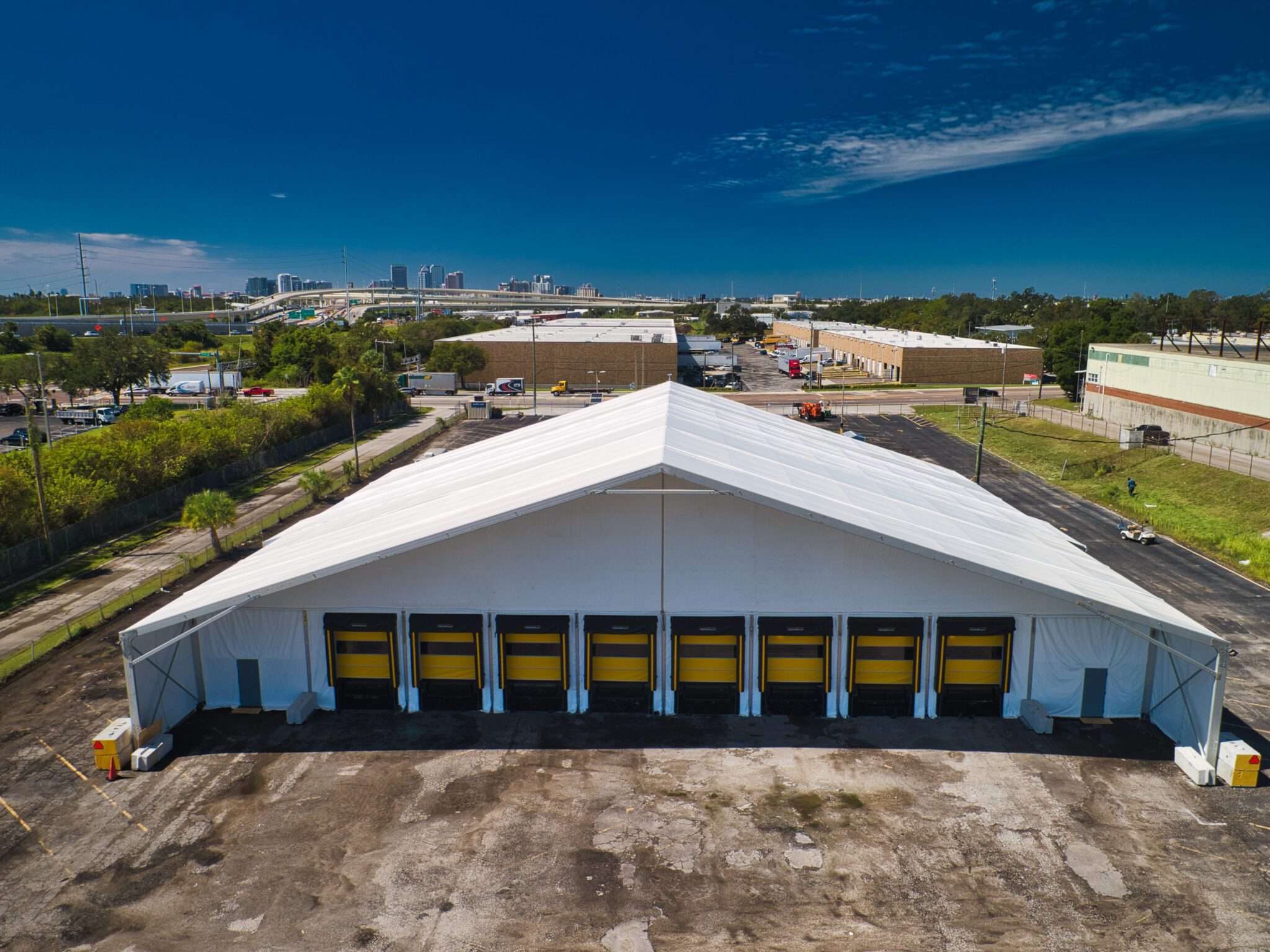
Logistics and transportation facilities are flat-roof environments at scale. A Werner Enterprises maintenance facility or a Union Pacific division office building can run 200,000 to 500,000 square feet of low-slope commercial roof. A cross-dock distribution center along I-80 might run 800,000 square feet of uninterrupted flat membrane. Managing a roofing project at that scale requires capacity, sequencing discipline, and a project team that does not get lost in the coordination.
The open-exposure wind conditions across the West Omaha and I-80 corridor logistics parks are the second defining factor. Distribution buildings in the Eppley Airfield freight zone and the Missouri River bottom face Exposure C wind conditions. The August 2020 derecho removed membrane from multiple distribution buildings in this corridor because the installed fastener patterns were designed for interior urban conditions, not open-exposure suburban. We correct that on every replacement project by running the wind-uplift calculation against actual exposure conditions.
Werner Enterprises — West Omaha Campus
Werner Enterprises operates its headquarters campus on Frontier Road in West Omaha, a major complex of office, driver operations, and maintenance buildings. The campus has a large flat-roof footprint across multiple buildings of different ages and construction types — original 1980s office buildings alongside later maintenance and driver services additions. The West Omaha location places the campus in open suburban exposure, and the maintenance buildings — with high ceilings and large equipment access doors — create specific wind-pressure dynamics on the roof system during severe weather events.
Our project managers have serviced corporate campus accounts in West Omaha long enough to know the Werner campus operational calendar — peak driver orientation cycles, fleet maintenance schedules, and the executive operations that make certain periods poor windows for significant construction activity. We submit project execution plans to facility management with enough lead time to accommodate those operational constraints.
Union Pacific — Downtown Omaha and Rail Infrastructure
Union Pacific's corporate headquarters at is a Class A downtown office building with the full documentation and coordination requirements of any major corporate campus — plus the added security awareness that comes with critical transportation infrastructure. The Union Pacific campus and adjacent rail operations buildings require contractor credentialing, access coordination with corporate security, and documentation of all personnel who will be on-site.
Union Pacific's maintenance and operations facilities — the Omaha rail yards, division offices, and the maintenance infrastructure along the Missouri River bottom — present a different profile: large industrial buildings on aging flat roofs, some dating to the 1970s, in high-wind-exposure positions along the river. Replacement scope on these buildings requires attention to wind-uplift, deck condition (some original metal deck is corroded in the river-bottom humidity), and compliance with rail operations safety requirements for contractor work near active trackage.
Distribution and Cross-Dock Facilities — I-80 and I-680 Corridors
The distribution and cross-dock buildings along I-80 and I-680 in the Omaha metro represent the highest-volume segment of the logistics roofing market. These are large-format buildings — 300,000 to 1,000,000 square feet of low-slope or dead-flat membrane — often managed by national REITs or 3PL operators who maintain multiple facilities in the metro.
Large-format distribution roofing requires specific project sequencing: production in 50,000-100,000 sq ft sections with same-day dry-in, material staging inside the building or at dedicated lay-down zones that do not conflict with dock operations, and crane positioning that accounts for the building's truck court and parking structure. The REIT asset managers who own these buildings need capital cost projections that cover multiple buildings in the portfolio — we produce multi-building capital plans that allow asset managers to sequence replacements against their depreciation schedule.
Dock doors and the aggressive forklift traffic near docks create specific wear patterns on low-slope roofs: drain blockage from debris generated near loading areas, membrane wear from foot traffic between rooftop equipment and dock HVAC units, and flashing stress at the parapet above dock doors from truck vibration. We document these patterns at inspection and include them in the maintenance scope.
Frequently asked questions
Can you produce a capital plan covering multiple distribution buildings in the Omaha market?
Yes. We inspect each building in the portfolio, produce individual condition reports, and then consolidate into a portfolio capital plan that ranks replacement priority, projects replacement windows (based on current membrane condition and age), and estimates capital cost band for each building. REIT asset managers use this to sequence capital allocation across the portfolio — it is a standard deliverable for multi-building accounts.
How do you manage same-day dry-in on a 500,000 sq ft distribution roof?
We sequence production in 50,000-100,000 sq ft sections. Each section is torn off and dry-in installed in the same production day — no section goes to end of day without protection. On a large distribution building, that means running multiple crews in parallel sections under a single project manager who coordinates the daily dry-in commitment. We do not start a section we cannot dry-in that day.
Do you do emergency response for distribution buildings after derecho or hail events?
Yes. We have responded to multiple distribution buildings in the Omaha metro after derecho events — the August 2020 event caused membrane blow-off on several I-680 corridor buildings. Emergency response for large distribution buildings includes temporary dry-in of damaged sections (EPDM or TPO temporary patching over exposed deck), documentation for insurance claim support, and permanent replacement scoping once the emergency is stabilized.
Scope a logistics facility roof in the Omaha metro.
We will walk every building in your portfolio, produce individual condition reports, and deliver a consolidated capital plan with replacement priorities and projected cost bands.
Ready to talk through a roof?
Tell us about the building and the roof problem. We'll document it and put a plan in writing — with an honest repair-vs-replace recommendation and no upsell pressure.