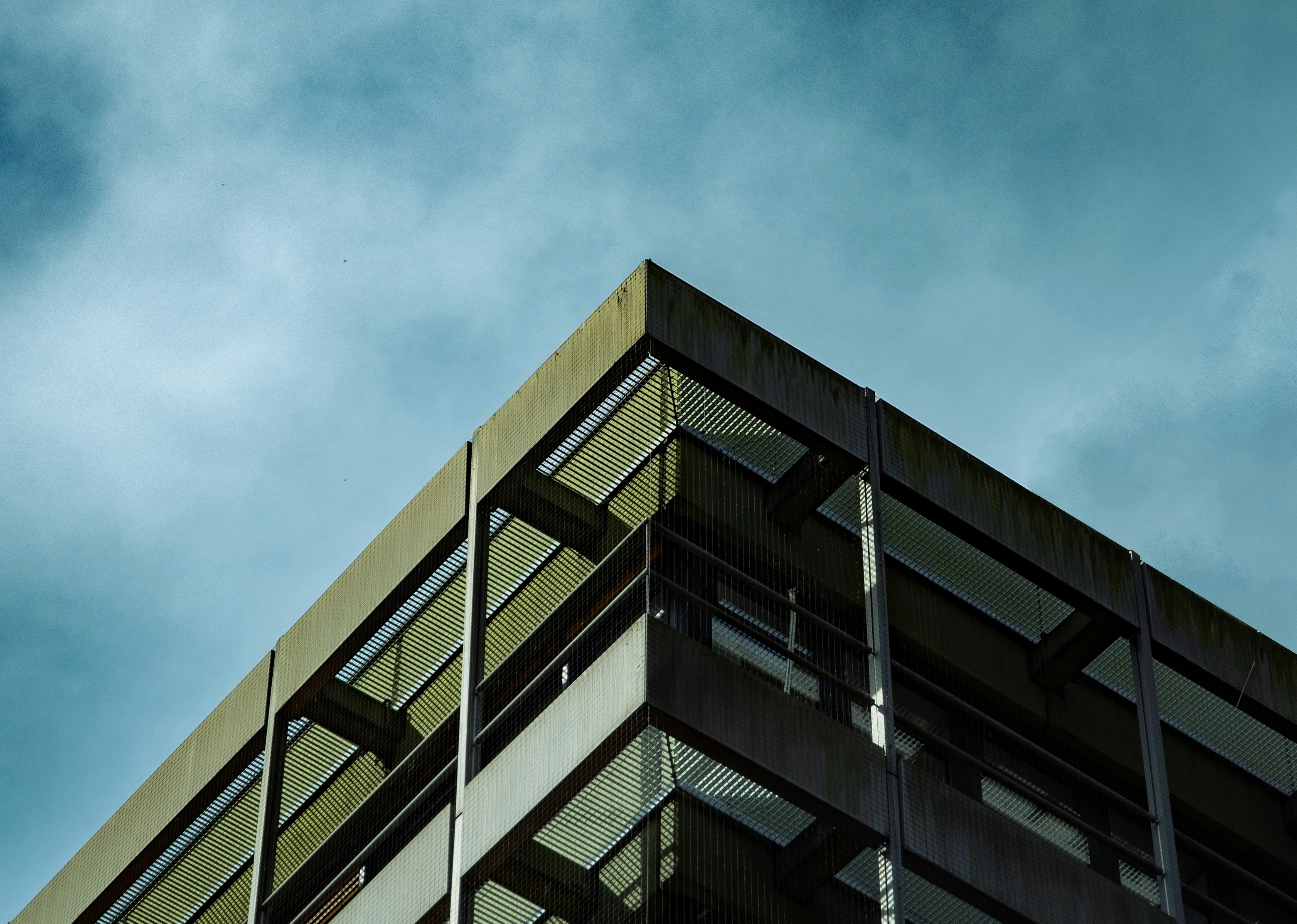
Downtown high-rise and mid-rise, the Kiewit Plaza and Berkshire Hathaway campus cluster, and the newer Aksarben West office corridor. Tenant coordination, crane permitting, and capital-standard closeout documentation for buildings where access is never simple.
Omaha office building roofing concentrates in three submarket generations. The first is the Downtown core — the buildings along Farnam, Harney, and Douglas Streets, including the Kiewit Plaza tower cluster at 36th and Farnam and the Berkshire Hathaway campus nearby. Most of these buildings were constructed in the 1970s and 1980s and are now in active reroof or deep-maintenance cycles. The second is the Aksarben Village and West Omaha office corridor, built largely between 2000 and 2015, now entering first major maintenance. The third is the newer mixed-use office construction in the Midtown Crossing area and along the 72nd Street office corridor.
What separates office building roofing from warehouse or retail work is not the membrane selection — it is the access logistics, the tenant environment, and the documentation standard at closeout. A crane permit in Downtown Omaha requires City of Omaha Development Services coordination, potential lane-closure permits on affected streets, and lead time we build into the pre-construction schedule, not into the production schedule. Tenant notification on a multi-tenant office building has to flow through building management before it reaches individual tenants — which means a project manager who shows up Monday morning and says 'we're starting today' has already broken the process.
The deliverable at closeout on an Omaha Class A office building is not just a warranty document. It is the zone diagram with all closeout photos, the maintenance contract in the format required by the building's asset manager or lender, and the manufacturer's warranty document signed by the manufacturer's field representative. We have closed out projects for buildings in the Kiewit corridor where the asset manager had a specific document template they needed — we matched it. That is the standard.
Downtown Crane Access and Permitting
Material staging on multi-story office buildings requires planning the structural load. Most Omaha office buildings cannot stage a full roof's worth of insulation boards on the roof at once. We sequence material delivery in daily loads matched to production output, which requires a reliable laydown area at grade and a crane operator on daily call. For mid-rise buildings in Aksarben West and the 72nd Street corridor where the roof hatch is too small for standard board delivery, we use a rooftop material elevator. We determine the access method during the inspection walk, not during production.
Tenant Disruption Management
Omaha's Downtown and Aksarben office buildings house law firms, financial services operations, and technology companies running production environments through the business day. Modified bitumen tear-off generates odor that can migrate through HVAC systems if the building's fresh-air intake is on the same side of the building as the work area. We coordinate with the building's HVAC contractor to adjust intake dampers during tear-off work, and we stage production to move away from active intake zones before work begins. This is not a standard practice on most commercial reroofs, but it is what occupied office buildings require.
We work with building management to identify scheduling windows that minimize disruption — early starts on loud demo work, pauses during identified high-traffic tenant periods, and same-day communication when the day's scope changes from the plan. Tenant complaints on an occupied office reroof almost always trace back to a communication failure, not a production failure.
Membrane Selection for Omaha Office Buildings
Most Omaha mid-rise and high-rise office buildings have accessible rooftops with regular maintenance traffic — cooling tower servicing, communications equipment, rooftop HVAC. That traffic argues for 80-mil TPO or fully adhered EPDM over a cover board, both of which handle mechanical-traffic loads better than standard 60-mil mechanically attached systems. Fully adhered systems are also appropriate on buildings where the deck system does not accommodate additional fastener penetrations, or where complex parapet geometry makes the cleaner flashing detail of a fully adhered system the right choice.
The Aksarben West office inventory from the 2000s and early 2010s includes a number of buildings that went in on 60-mil mechanically attached TPO that is now approaching or past the 20-year warranty term. These buildings are good recover candidates if moisture cores read dry — a TPO recover with new insulation and 20-year warranty resets the capital clock at roughly half the cost of full replacement.
Frequently asked questions
Do you manage crane permitting for Downtown Omaha office buildings?
Yes. We handle the City of Omaha right-of-way permit, temporary no-parking orders, and crane operator coordination. Building management does not need to navigate this process. Lead time for Downtown permits is 3-4 weeks, which we build into the pre-construction schedule.
Can reroofing happen while tenants are in the building?
Yes, with proper scheduling and communication. We coordinate production windows with building management, stage work away from active HVAC intakes during tear-off, and communicate schedule changes the same day they occur. Full building evacuation is not required on most Omaha office reroofs.
What does your closeout package look like for an Omaha Class A office building?
The closeout package includes the manufacturer warranty document signed by the manufacturer's field rep, a photo-keyed zone diagram of the completed roof, the maintenance contract, and any documentation the asset manager or lender requires. We have matched specific document formats for buildings in the Kiewit corridor on request.
Scoping an Omaha office building reroof or repair?
Our project managers will walk the roof, assess the tenant environment, and deliver a written scope with a pre-construction plan that addresses access, permitting, and occupant coordination before production starts.
Ready to talk through a roof?
Tell us about the building and the roof problem. We'll document it and put a plan in writing — with an honest repair-vs-replace recommendation and no upsell pressure.