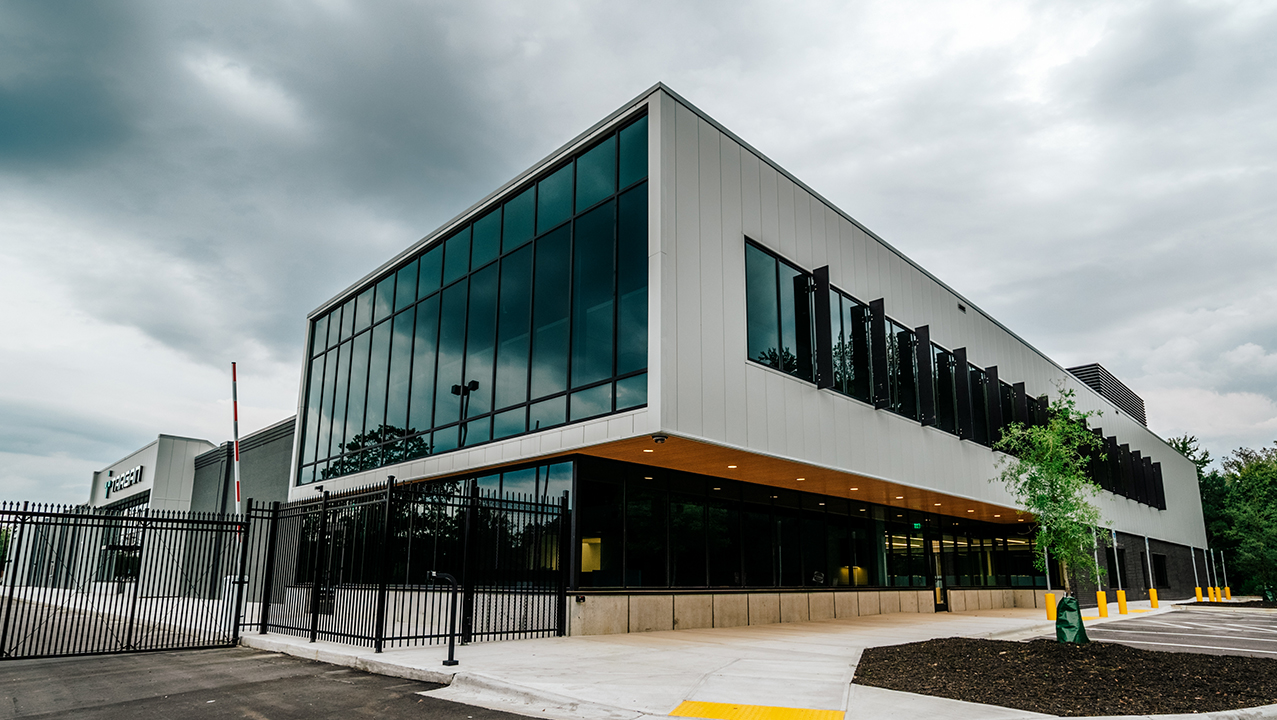
On most buildings a roof leak is a maintenance ticket. Over a cleanroom, a compounding suite, or a bench full of sequencers it can scrap a batch, blow an environmental qualification, and pull a regulated process offline for weeks. That single fact changes how a roof over a lab or pharma facility has to be built and how the work has to be run. We approach these buildings understanding that the roof's only acceptable performance is not failing over equipment that cannot tolerate a drop of water.
The Rooftop Is the Mechanical Floor
Walk the roof of a lab building near the University of Nebraska Medical Center campus, in the bioscience space around Aksarben, or in the flex-research buildings off 72nd and along the I-80 corridor, and it looks less like a roof than an equipment yard. Cleanroom air handlers, fume-hood and chemical exhaust stacks, biosafety cabinet exhausts, chillers, process-gas lines, and bundles of controls conduit all break the membrane, often packed tightly together. Each of those is a flashing detail and a potential leak directly above something irreplaceable. There is rarely a generous open field to work in. The job is mostly detail work, threaded between curbs we are not allowed to disturb, and that is exactly where ordinary commercial roofing crews get a critical building into trouble.
You Cannot Upset the Air
A cleanroom holds its classification through pressure. Air balance and the cascade from clean spaces to dirtier ones is what keeps particles and contamination out, and that balance is referenced to rooftop supply and exhaust connections. Cut into flashing next to a cleanroom exhaust curb without coordinating it and you can swing a pressure differential, pull dust toward an intake, or trip a monitored alarm that forces the facility to investigate an excursion. We plan penetration and curb work around the facility's HVAC and validation schedule, sequence it into planned maintenance windows where one exists, keep tear-off debris controlled so nothing migrates toward an air path, and confirm with the building's engineering or MEP group that pressures have recovered before we consider that area closed. The roof crew has to think like part of the contamination-control plan, not like a trade working over an empty warehouse.
Exhaust Chemistry Decides the Membrane
Lab exhaust is not clean air. Solvent vapor, acid fume, and other reactive streams leave the building through rooftop stacks, and in the wrong wind they condense and fall back onto the membrane right around the stack. That fallout chemically attacks roofing that was never rated for it, producing a ring of premature degradation that standard warranties specifically exclude. So we don't pick a membrane off a default sheet. For lab and pharma roofs we specify PVC, typically a reinforced 60-mil, because it carries the broadest chemical resistance of the single-plies and its heat-welded seams give no adhesive bond line for fumes to break down. Around the most aggressive stacks we step up the detail — heavier sheet, sacrificial walk-pad and target sheets that can be replaced without touching the field membrane, and stainless or coated metal where reactive condensate lands. The starting point is always the same question to the facility: what actually comes out of these stacks, and at what concentration.
Redundancy Over the Spaces That Matter
Because the cost of a leak here is measured in lost product and lost qualifications rather than ceiling tiles, we build margin into the assembly over critical spaces. That can mean a fully adhered system that doesn't rely on a fastener field puncturing the deck, a secondary water-shedding layer or air-and-vapor barrier that buys time if the top membrane is ever breached, generous tapered drainage so water never sits and finds a seam, and overflow scuppers sized so a plugged primary drain over a cleanroom is an annoyance rather than a flood. The goal is a roof where a single point of trouble does not become a single point of failure above the equipment that can least tolerate it.
Access, Clearance, and Showing Up Ready
These are controlled buildings. Pharmaceutical manufacturing, drug compounding, and many research operations carry access rules — badging, background screening, escort requirements, and in some cases controlled-substance or select-agent security that governs exactly who gets on the roof and through which door. A crew that arrives without clearances already in place burns a mobilization day and can itself become a documented security event. We handle credentialing during preconstruction so the people on the roof are cleared before the start date, and we lock down staging, hoisting paths, and roof-access routes that keep our crew out of clean corridors and lab space below.
Documentation a Quality Auditor Will Accept
Regulated facilities live and die by their paperwork, and the roof file becomes part of that record. We work inside the facility's quality system rather than around it: reviewed submittals and material data, a site-specific safety plan, daily work logs tied to roof zones, a penetration inventory and roof-zone diagram, manufacturer installation and inspection records, system certification where FM or UL listing is required, and registered warranty documents at closeout. When an FDA, USDA, or internal quality audit asks what was done to the roof over a GMP suite and when, the answer should already be in a binder. That is the standard we build the package to.
Pharmaceutical & Laboratory Roofing Questions
We treat the air balance as a constraint on the schedule, not an afterthought. Penetration and curb work near cleanroom supply or exhaust connections is coordinated with your engineering or validation team and slotted into planned HVAC windows where possible, debris is contained so nothing migrates toward an intake, and we confirm pressures and the cascade have recovered before we consider that area closed. The crew works as part of the contamination-control plan.
PVC, generally a reinforced 60-mil, because it has the broadest chemical resistance among single-plies and its welded seams leave no adhesive line for fumes to attack. Around the most aggressive solvent or acid stacks we add heavier sheet, replaceable target and walk-pad layers, and corrosion-resistant metal where reactive condensate lands. We base all of it on the actual exhaust chemistry, which we confirm with your MEP group before specifying.
With redundancy over the spaces that matter: typically a fully adhered system that doesn't rely on fasteners puncturing the deck, a secondary water-shedding or air-and-vapor layer beneath the membrane, tapered drainage so water never ponds on a seam, and oversized overflow scuppers so a plugged drain over a cleanroom stays a nuisance instead of a flood. The aim is that no single failure point sits directly above equipment that can't tolerate water.
Yes. We handle badging, background screening, escort arrangements, and any controlled-substance or select-agent security requirements during preconstruction so everyone on the roof is cleared before the start date. We also plan staging and roof access so the crew never routes through clean corridors or lab space. Showing up uncleared wastes a mobilization and can trigger a security event — we don't let that happen.
It's built for one. We work inside your quality system and deliver reviewed submittals and material data, a site-specific safety plan, daily logs tied to roof zones, a penetration inventory and roof-zone diagram, manufacturer installation and inspection records, FM or UL system certification where required, and registered warranties. When an auditor asks what was done over a GMP suite and when, it's already documented.
Ready to talk through a roof?
Tell us about the building and the roof problem. We'll document it and put a plan in writing — with an honest repair-vs-replace recommendation and no upsell pressure.