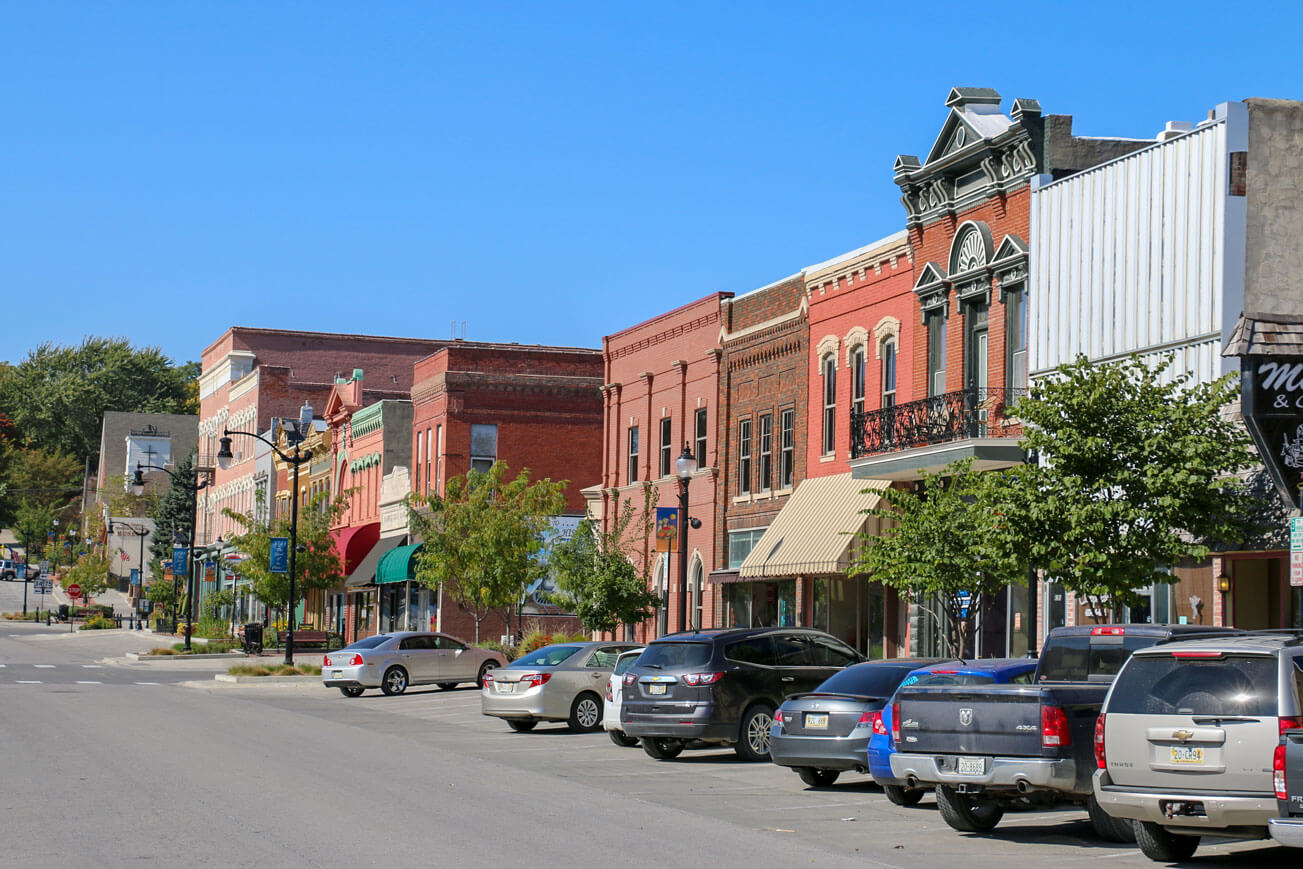
Plattsmouth is Cass County's seat, 25 miles south of Omaha on US-75 along the Missouri River — a historic commercial district with older BUR and modified bitumen inventory, and a Missouri River industrial fringe with specialized roof conditions driven by flood-zone proximity.
Plattsmouth is the county seat of Cass County, situated where the Platte River meets the Missouri River at the south edge of the Omaha metro. Its commercial inventory reflects its history: a Main Street commercial district with 1890s through 1950s commercial buildings, a light industrial district along the Missouri River bottom, and newer commercial development along US-75 at the edge of the city.
We service Plattsmouth on a project basis from our office. Travel time via US-75 south is 40-50 minutes depending on the specific location within Plattsmouth. For planned replacement and assessment projects, we schedule Plattsmouth work to minimize back-and-forth from Omaha. Emergency response to Plattsmouth commercial buildings involves a 40-50 minute travel time, which we are transparent about when discussing emergency coverage with Plattsmouth property owners.
Plattsmouth's commercial roof challenges are distinct from the suburban Sarpy County and West Omaha corridors. The age of the inventory, the flood-zone conditions along the Missouri River, and the historic masonry construction of the downtown core all create assessment requirements that differ from the standard suburban commercial project.
Main Street Commercial District — Historic Masonry Inventory
Plattsmouth's Main Street commercial district includes buildings constructed as early as the 1890s — masonry construction on original structural systems, with BUR or modified bitumen roof systems that have been in place for decades and in some cases for the entire life of the building. The parapet walls on these buildings are masonry, often with no through-wall flashing at the parapet base and no counterflashing at the roof-to-parapet intersection.
Assessing historic masonry commercial buildings in Plattsmouth requires attention to the wall-to-roof interface that goes beyond what a standard flat-roof inspection covers. Missing through-wall flashing at parapet bases means rainwater and snowmelt enter the wall assembly rather than shedding to the roof — the resulting moisture damage is in the wall, not the roof membrane, but it is a direct consequence of the roof system's termination detail. We document wall moisture conditions during our assessments of historic Plattsmouth buildings and include wall-to-roof interface recommendations in our written reports.
The BUR systems on the oldest Plattsmouth Main Street buildings are genuinely historic — some were installed in the 1940s and 1950s and have been maintained with bitumen flood coats and gravel additions over their entire life. These systems are structurally complex: the accumulated dead load of decades of maintenance layers can be significant, and the deck condition under those layers is only determinable by opening inspection ports.
Missouri River Industrial District — Flood-Zone Conditions
The industrial and commercial buildings along the Missouri River bottom in Plattsmouth face a set of roof conditions that the suburban Omaha corridor does not: FEMA-mapped flood zone exposure, periodic inundation of the lowest-lying structures, and the moisture intrusion patterns that follow flood events. The 2011 Missouri River flood was significant at Plattsmouth — the confluence of the Platte and Missouri Rivers at this location created a compound flood event that inundated the industrial bottom.
Buildings in the Plattsmouth flood zone have moisture intrusion patterns in wall and roof assemblies that develop over years following a flood event. The moisture migrates upward through masonry walls and into the roof assembly at the parapet base. Standard flat-roof inspection does not capture this failure mode. We include wall assembly moisture assessment and drainage infrastructure evaluation in our condition reports for any Plattsmouth building within the mapped flood zone.
The Missouri River industrial district also sits in open-exposure wind conditions at the confluence of two river valleys — the Platte and Missouri valley floors create a wind funnel that produces Exposure B or C conditions on buildings in the bottom. We calculate wind-uplift from actual exposure conditions for any Plattsmouth building in this zone.
US-75 Corridor and Cass County Coverage
The US-75 corridor through Plattsmouth and into Cass County carries newer commercial development — gas stations, convenience retail, and service commercial built on standard 60-mil TPO systems. These buildings are in a different condition category than the Main Street historic inventory: standard flat-roof mechanics, documented manufacturer warranty terms, and maintenance cycles that are straightforward to manage.
Cass County commercial properties south of Plattsmouth — agricultural businesses, rural commercial, and grain operations along the Missouri River corridor — are accessible from our Plattsmouth project day schedule. We assess these properties on a project basis with the same attention to structural capacity and chemical exposure that we apply to Washington County agricultural buildings.
Frequently asked questions
How do you assess buildings in the Plattsmouth flood zone?
We include wall assembly moisture assessment and drainage infrastructure evaluation in our condition reports for any Plattsmouth building in the FEMA-mapped flood zone. Flood-related moisture intrusion enters through wall assemblies and parapet base transitions, not through the field membrane — standard flat-roof inspection misses it. We document it.
What permits apply to commercial roof work in Plattsmouth?
Plattsmouth commercial work is permitted through the City of Plattsmouth Building Department. Cass County authority applies for unincorporated county properties. We handle permit applications for all replacement and major repair work.
Can you handle historic masonry commercial buildings in downtown Plattsmouth?
Yes. Historic masonry buildings require attention to the wall-to-roof interface that goes beyond standard flat-roof inspection. We document wall moisture conditions, assess through-wall flashing at parapet bases, and include wall-to-roof interface recommendations in every assessment on a historic Plattsmouth Main Street building.
Plattsmouth commercial roof assessment or scope?
We service Plattsmouth and Cass County on a project basis. Documented assessment including flood-zone and wall-to-roof interface evaluation, written scope, capital number.
Ready to talk through a roof?
Tell us about the building and the roof problem. We'll document it and put a plan in writing — with an honest repair-vs-replace recommendation and no upsell pressure.