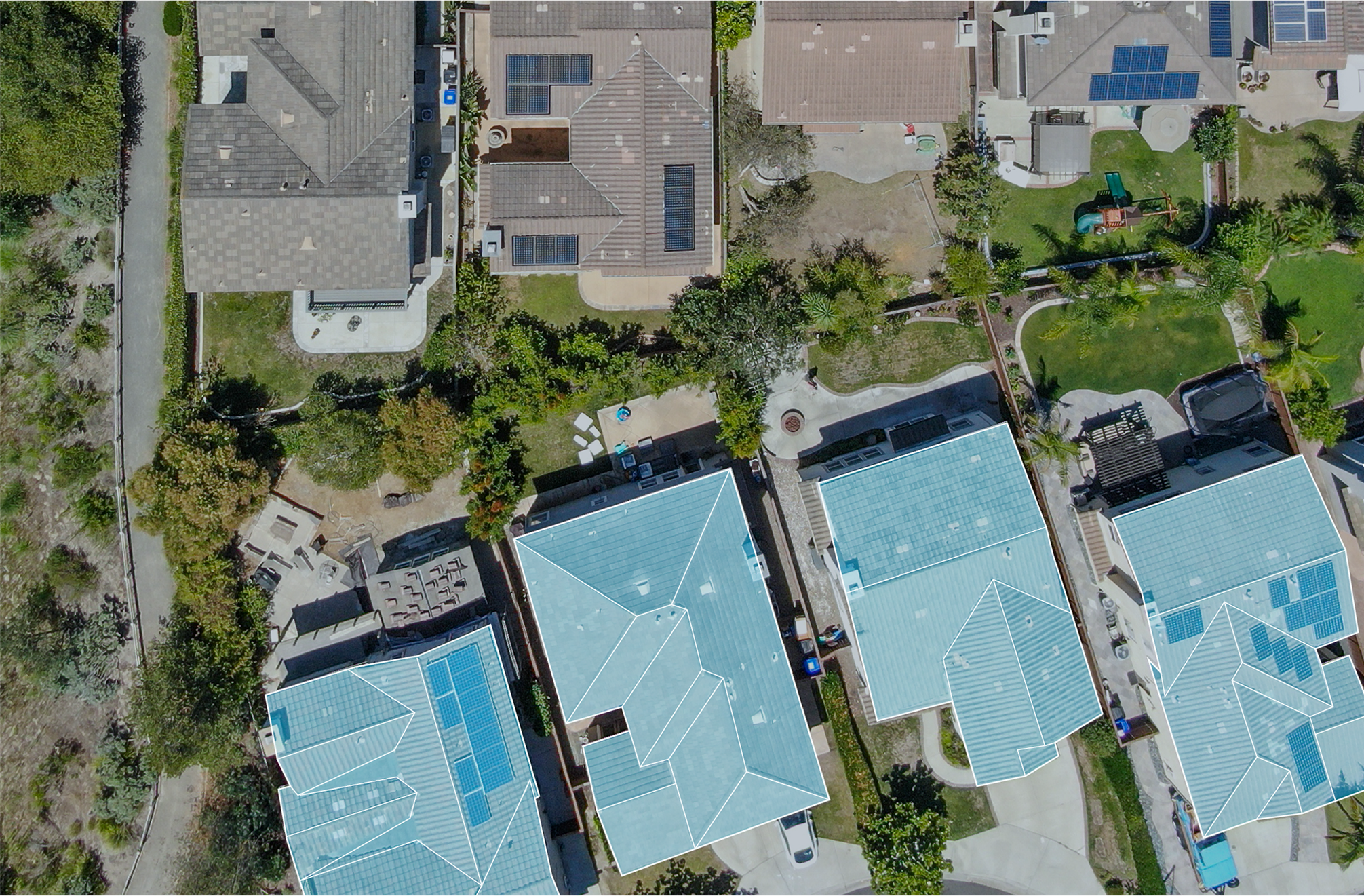
A written condition report with photographs, measurements, and repair recommendations gives building owners, investors, and facility managers the documented basis to make capital decisions — not a verbal estimate from a contractor with a sales agenda.
The standard interaction between an Omaha commercial building owner and a roofing contractor is: the owner calls because something is leaking, the contractor comes out, looks at the roof, and gives a verbal description and a repair bid. No written documentation, no photographs keyed to a roof zone diagram, no assessment of the rest of the roof's condition relative to the leak. The owner fixes the leak and has no better understanding of the roof's overall condition than before the call.
We produce written roof condition reports as a standalone service, separate from any repair or replacement engagement. The report documents existing conditions — membrane, flashings, drains, equipment curbs, parapets — with photographs keyed to a numbered roof zone diagram, a written description of each identified deficiency, a repair recommendation for each deficiency, and an overall condition rating for the roof system. The owner receives a document they can file, share with their capital planning team, present to their board, or use as the basis for a repair bid specification.
Condition reports are used in several distinct contexts in the Omaha market. Pre-acquisition due diligence: investors and lenders evaluating commercial buildings on the Omaha CBD and suburban corridors need an independent roof condition assessment separate from any contractor who might be competing for the repair or replacement work. Insurance documentation: storm damage claims on Omaha buildings following derecho events, hail storms, and the winter ice-dam events that occur in the Keystone and Dundee residential-commercial mix require documented pre-storm and post-storm condition records. Capital planning: building owners and facility managers with multiple buildings need condition reports across their inventory to prioritize spend and forecast capital requirements.
What the Written Report Contains
Roof zone diagram: A plan-view drawing of the roof with numbered zones keyed to the inspection photographs. Every identified deficiency in the report is referenced to a zone number and a photograph number — the reader can locate any finding on the diagram and pull up the corresponding photograph. This is the documentation format that insurance adjusters, capital planning teams, and acquiring investors require for a condition report to be useful.
Membrane condition summary: Condition rating by zone (Good / Fair / Poor / Critical), estimated remaining service life range, and a written description of any deficiencies observed. For TPO and EPDM systems, seam condition is separately rated — seam failure is the most common leak pathway and warrants its own documentation. For BUR and modified bitumen systems, ply condition, alligatoring, ridging, and blistering are each rated separately.
Flashing condition summary: Every parapet section, penetration flashing, curb flashing, and edge detail is documented. Nebraska freeze-thaw cycling concentrates damage at flashings — a thorough flashing assessment is not a minor item on any Omaha commercial roof report. Each flashing deficiency is rated for urgency: Immediate Repair Required, Repair Within 12 Months, and Monitor.
Drainage assessment: Each drain and scuppers is documented for debris accumulation, flow rate, and evidence of chronic ponding in the adjacent roof field. Drain locations are plotted on the zone diagram. Ponding areas — locations where water stands more than 48 hours after a rain event — are outlined on the diagram with estimated ponding depth and area.
Repair recommendations: For each identified deficiency, a recommended repair action is specified: the repair type, the materials to be used, and the urgency rating. Recommendations are written to be specific enough to serve as a scope of work for a repair bid — not 'fix the flashing at the west parapet' but 'strip and replace modified bitumen stripping ply at west parapet, 42 linear feet, with new SBS stripping ply extended 8 inches onto field membrane and terminated with metal termination bar.'
Condition Reports for Pre-Acquisition Due Diligence
Commercial real estate acquisition in Omaha increasingly includes an independent roof condition report as part of the physical due diligence package. The roof is typically the largest deferred maintenance liability on any commercial building — a building with a $2 million purchase price and a roof at end of life carries a $150,000-400,000 roof replacement liability that belongs in the acquisition model, not in the surprise column after closing.
We produce condition reports for acquiring investors and their lenders on any Omaha commercial building — performing buildings in the CBD, value-add warehouse and industrial on the Missouri River corridor, medical office on the 72nd Street corridor, and suburban retail on West Dodge. The report is addressed to the acquiring party, is signed by our project manager, and is formatted for inclusion in the due diligence file. Turnaround is typically 3-5 business days from inspection to written report delivery.
For lenders and their appraisers requiring a third-party roof assessment, our condition reports satisfy the documentation standard for most commercial loan conditions. We do not provide engineering certifications — for buildings where a structural engineer's sign-off on the deck or the rooftop equipment loading is required, we coordinate with licensed structural engineers in the Omaha market.
Storm Damage Documentation
Omaha's storm history makes post-storm roof documentation a recurring need. The August 10, 2020 derecho produced the largest volume of commercial roof damage documentation work we have handled — more than a dozen Omaha commercial buildings required written pre-claim and post-claim condition reports to support insurance claims, distinguish storm damage from pre-existing conditions, and establish the repair scope for the adjuster.
Post-storm condition reports follow the same format as standard inspection reports but include specific documentation of storm-related damage: membrane blow-off extent and location, punctures from windborne debris, hail impact marks (size, density, and location), parapet failure, and equipment displacement. We photograph storm damage while it is fresh — within 48-72 hours of the event where access is available — because adjuster visits are often delayed, and the visible damage documentation from the days immediately after the event is what supports or defeats the claim.
Frequently asked questions
What does a written condition report cost?
For a standard single-building inspection and written report on an Omaha commercial building under 50,000 sq ft: $500-1,200 depending on access complexity, roof system type, and report turnaround requirement. Pre-acquisition reports with expedited turnaround (48-72 hours) are priced at the higher end of that range. Reports on buildings over 100,000 sq ft are quoted individually. The fee is applied against any repair or replacement work we are awarded on the building.
How long does the inspection take?
For a 20,000-40,000 sq ft commercial roof: 2-3 hours on the roof plus office time for the written report. Larger roofs, roofs with complex equipment arrays, or multi-building campus inspections take proportionally longer. We schedule inspections during normal business hours and coordinate with facility management for roof access — we do not show up unannounced.
Can the report be used for a warranty claim?
Our condition reports document existing conditions and identify deficiencies, but they are contractor inspections, not manufacturer warranty inspections. If a manufacturer warranty claim requires a manufacturer-sponsored inspection, we coordinate with the relevant manufacturer's field representative and can schedule the joint inspection. Our condition report can support the claim documentation but does not by itself satisfy the manufacturer's inspection requirement.
Need a written roof condition report for an Omaha building?
We will inspect the roof, photograph every deficiency keyed to a zone diagram, and deliver a written report in 3-5 business days — suitable for capital planning, due diligence, or insurance documentation.
Ready to talk through a roof?
Tell us about the building and the roof problem. We'll document it and put a plan in writing — with an honest repair-vs-replace recommendation and no upsell pressure.