Omaha's older commercial inventory — Downtown, Midtown, and the pre-1980 industrial stock along the Missouri River corridor — carries a significant BUR inventory. We inspect, repair, recover, and replace built-up roofing systems and give owners an honest account of what the system actually needs.
Omaha occupies a singular position in American commerce: home to Union Pacific Railroad's world headquarters, one of the nation's most important rail hubs, Offutt Air Force Base and US Strategic Command, and a remarkable concentration of Fortune 500 corporate campuses and food processing operations. The industrial facilities that support this economy require roofing systems engineered for Nebraska's demanding climate — 30 inches of rain, 30 inches of snow, significant hail and tornado risk, and freeze-thaw cycles that challenge every roofing assembly every year. Our industrial roofing team has the technical depth and regional experience to protect what you've built.
Offutt Air Force Base in Bellevue, just south of Omaha, houses US Strategic Command — one of the most operationally critical military installations in the world. The base's hangars, command facilities, maintenance buildings, and support structures represent an enormous and sensitive roofing maintenance responsibility. Work in and adjacent to military installations requires contractor workforce credentialing, security-conscious project management, and meticulous documentation. Our team has experience working within the operational constraints of defense facilities and understands the additional requirements these environments impose.
Union Pacific's headquarters and rail operations represent another defining element of Omaha's industrial identity. As one of the largest freight railroads in North America, UP operates extensive maintenance facilities, locomotive shops, and rail yard buildings in and around Omaha. These large-span industrial structures — often with overhead crane systems, complex penetration fields, and high internal humidity from maintenance operations — require industrial-grade roofing solutions that deliver long service lives with minimal operational disruption. Freeze-thaw resilience and drainage performance are particularly important in these high-asset environments.
The meat packing and food processing corridor along the Missouri River and in the South Omaha industrial district represents one of the most demanding roofing environments in the region. Food processing facilities have high internal humidity, temperature differentials between refrigerated and ambient zones, aggressive washdown chemical exposure on roofing membranes that contact interior areas, and operational requirements that severely limit available windows for roofing work. We design vapor retarder systems for these applications that prevent condensation from forming within the insulation assembly, which is critical in a building where interior conditions can differ dramatically from exterior conditions.
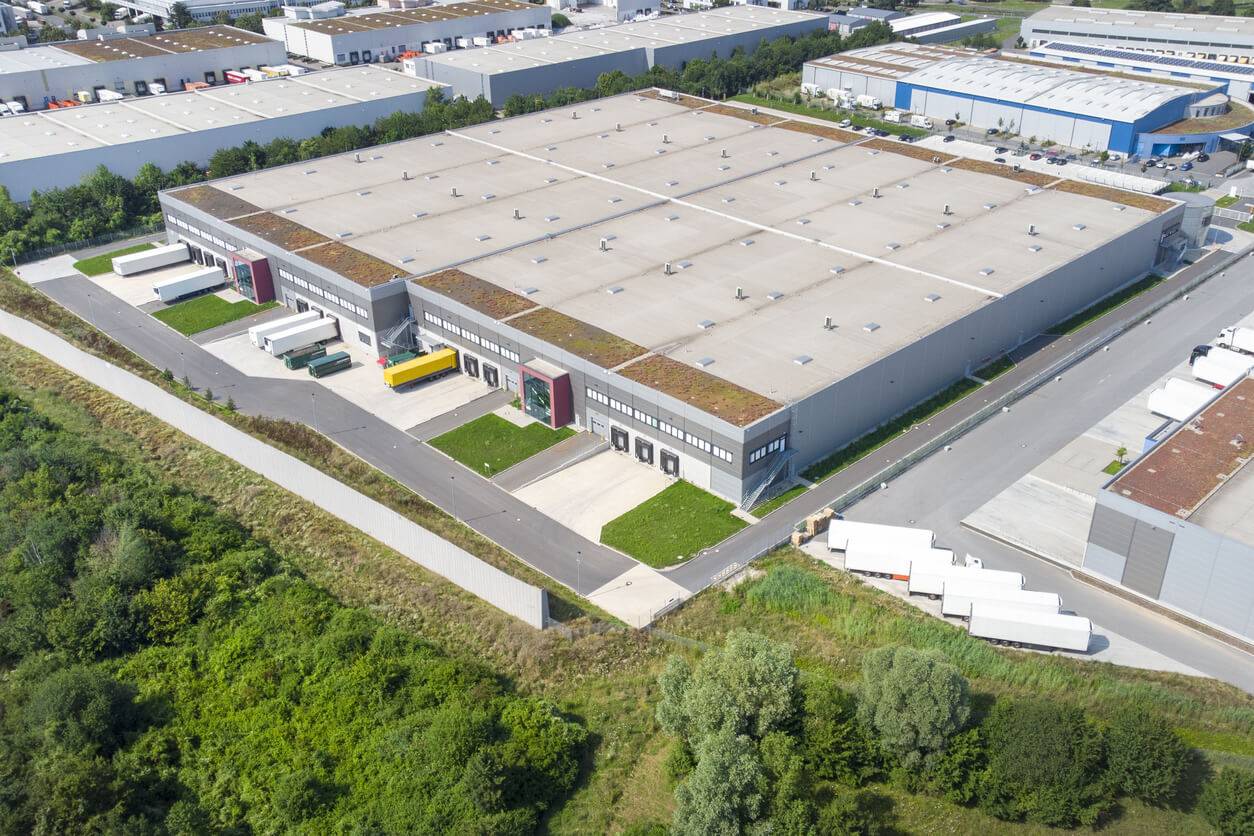
Conagra's corporate and manufacturing presence, Nebraska Furniture Mart's massive retail and distribution campus, and the growing cluster of e-commerce distribution centers in the Omaha metro all represent significant industrial roofing assets. Large, flat-roofed distribution centers with substantial square footage require careful drainage engineering, robust edge detail specifications, and mechanical attachment systems designed for Nebraska's wind uplift loads. The I-80/I-29 interchange area has become one of the most active industrial development corridors in the Missouri Valley, and we work regularly with developers, contractors, and building owners on new construction and re-roofing projects in this corridor.
Nebraska weather is genuinely challenging for roofing systems. The 30 inches of annual rainfall includes significant hail events from spring and summer supercell thunderstorms — Omaha has experienced some of the costliest hail events in Midwest history, with insured losses running into the hundreds of millions of dollars. We specify impact-resistant membrane systems for new and replacement installations and document roof conditions thoroughly after any significant hail event to support insurance claims. Our photographic and written documentation packages have helped countless Omaha-area facility owners recover appropriate insurance settlements.
Winter in Omaha brings freeze-thaw cycling that is more damaging to roofing systems than the total snowfall figure suggests. The region regularly experiences periods of freeze, thaw, and refreeze within single weather systems, meaning that roof membranes, seams, and flashings may cycle through expansion and contraction dozens of times in a single winter. EPDM rubber membranes maintain flexibility at temperatures far below freezing and are a popular choice for Nebraska applications for this reason. TPO membranes have also improved significantly in cold-temperature flexibility and are widely used. We match the membrane specification to the thermal demands of each specific building's location and use profile.
Energy efficiency in Omaha's industrial buildings carries significant financial weight. Heating degree days in Nebraska are substantial, and poorly insulated industrial roofs are a major source of heat loss. During re-roofing projects, we evaluate existing insulation R-values and typically recommend increasing insulation thickness to meet or exceed the current ASHRAE 90.1 commercial energy code requirements, which Nebraska has adopted. Tapered insulation systems can simultaneously improve drainage and bring R-values up to current standards, addressing two common performance deficiencies in a single operation. The energy savings from improved roof insulation on a large industrial building can be substantial and measurable.
Industrial roofing in the Omaha metro also encompasses the significant warehousing and distribution infrastructure that has developed along the I-80 corridor in western Omaha and in suburban communities like La Vista, Papillion, and Elkhorn. These newer facilities often have TPO or PVC membranes approaching their first major service milestone at 15 to 20 years. A proactive maintenance and inspection program during this period can identify and address minor defects before they become significant water infiltration problems, extending membrane life and deferring capital replacement costs. We offer documented inspection and maintenance programs tailored to the service life stage of each facility.
From the strategic military installations at Offutt to the food processing plants of South Omaha, the rail maintenance facilities of Union Pacific, and the rapidly growing e-commerce logistics corridors along I-80, industrial Omaha depends on roofing contractors who combine technical expertise with the practical experience of working in complex, operationally sensitive environments. Our team delivers manufacturer-certified installations, rigorous safety programs, and a commitment to project completion that respects the operational constraints of the facilities we serve. Contact us to schedule a professional roof assessment and learn how we can help protect your Omaha industrial facility.
Questions Owners Ask
A commonly used industry benchmark is budgeting 1 to 2 cents per square foot per year for routine maintenance on a well-performing industrial roof, escalating to 3 to 5 cents per square foot for roofs approaching end of life or showing active maintenance issues. In Omaha's climate, the combination of hail exposure, freeze-thaw cycling, and tornado-season severe weather makes proactive maintenance spending particularly cost-effective — minor repairs after hail or wind events typically cost a fraction of what the same damage causes if water is allowed to infiltrate insulation over a winter. Annual professional inspections with written reports are the foundation of any sound maintenance program.
Refrigerated and cold-storage facilities require vapor retarders positioned on the warm side of the insulation assembly — which in a cold climate means above the deck and below the insulation for a roof assembly. The goal is to prevent warm, humid interior air from migrating into the insulation and condensing on cold surfaces. The exact vapor retarder specification depends on the interior design temperature and humidity, the roof assembly R-value, and the exterior climate data. We perform a dew point analysis for these applications to confirm that the assembly design keeps condensation from occurring within the insulation layer, and we use materials appropriate for the specific temperature exposure.
The most effective hail damage documentation combines a professionally written roof condition report with dated photographs of impact marks on membrane surfaces, metal edge components, HVAC equipment, and skylights. We use calibrated photographic scales in damage photos to document stone size evidence and provide a systematic survey of impact density across the roof field. A report from a licensed roofing contractor — and ideally from an independent roof consultant as well — carries significantly more weight with insurance adjusters than an owner's own assessment. We work routinely with insurance adjusters and have a documentation format that addresses the specific criteria they evaluate in hail claims.
Freeze-thaw cycles cause roof drain bodies and leaders to expand and contract, which can loosen clamping rings, crack brittle drain extensions, and dislodge the sealant joints at drain flashing connections. Standing water that freezes in drain sumps can physically push a membrane up off its substrate. We recommend installing domed drain covers to shed water away from drain centers, confirming that drain flanges are properly integrated with the membrane in a watertight manner, and inspecting all drain hardware each spring for physical damage. Heated drain hoses are available for roofs with persistent ice dam or freezing drain problems and can be retrofitted without major disruption.
With proper installation and regular maintenance, a mechanically attached or fully adhered TPO or EPDM membrane on an Omaha industrial building typically delivers 20 to 30 years of service life before replacement becomes necessary. Standing seam metal roofing can last 40 years or more. Modified bitumen systems typically deliver 15 to 20 years. These ranges assume regular maintenance and prompt repair of minor defects — neglected roofs in Omaha's climate can fail significantly earlier due to hail damage that allows water to saturate insulation, which then freezes and accelerates membrane detachment. The annual maintenance inspection is the single most cost-effective investment in extending roof service life.
Frequently asked questions
My BUR roof is 30 years old. Should I recover or replace it?
Age alone does not determine the answer — insulation condition and ply integrity do. A 30-year BUR with dry insulation and intact plies is a strong candidate for modified bitumen cap sheet recover. A 30-year BUR with saturated insulation across large areas needs replacement. We pull moisture cores to give you the actual answer, not the one that sells the most work.
How long does BUR repair typically take on a Downtown Omaha building?
Targeted BUR repair — flashing replacement at parapets and penetrations, blister repair, crack routing and fill — typically runs 2-5 days for a 20,000-30,000 sq ft roof. Full recover with modified bitumen cap sheet runs 1-2 weeks for the same footprint. Access and permitting on Downtown Omaha buildings (crane, lane closure, parking permit) can add pre-mobilization time of 2-3 weeks.
Can you repair a BUR roof in Omaha winter?
Hot-mopped BUR and torch-applied modified bitumen require substrate temperatures above 40°F for proper adhesion. Cold-applied bituminous repair products can be applied at lower temperatures. Emergency temporary repairs — stopping an active leak — can be done with cold-applied materials in any weather. Permanent BUR repair and recover is scheduled for April through October in most years.
BUR inspection or scope for your Omaha building?
We will walk the roof, pull cores where the condition warrants it, and deliver a written condition report with a repair, recover, or replace recommendation — and the reasoning behind it.
Ready to talk through a roof?
Tell us about the building and the roof problem. We'll document it and put a plan in writing — with an honest repair-vs-replace recommendation and no upsell pressure.