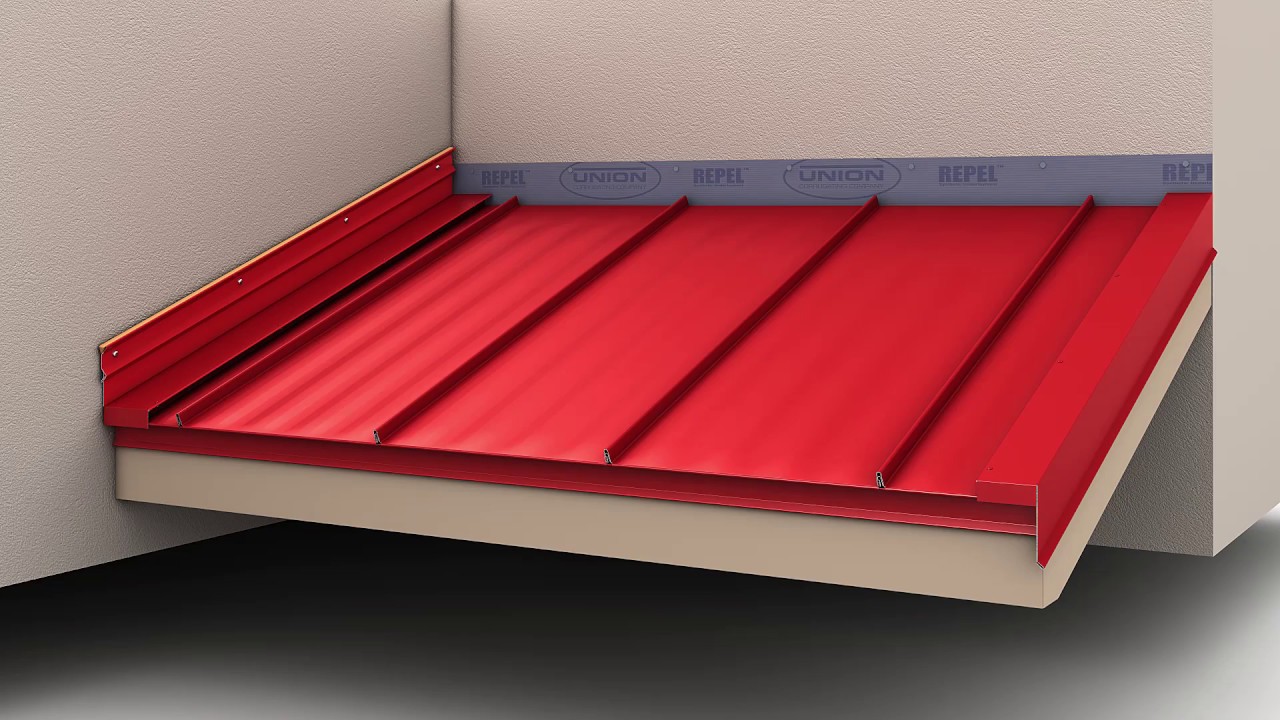
Parapets are the most thermally stressed component on any Omaha commercial flat roof. They cycle from -25°F in January to 100°F-plus in August, and the flashing, coping, and masonry details at the parapet are where most commercial roof leaks originate. We document what is failing, repair it with details that survive Nebraska's freeze-thaw envelope, and integrate the parapet repair with the adjacent membrane system.
A parapet wall stands above the roof plane and takes the full force of every weather event that moves through Omaha — summer UV, January cold, spring hail, derecho-level straight-line winds, and the frost-and-thaw cycling that breaks mortar, opens counterflashing joints, and works coping caps off their clips. A parapet that is visually intact from the ground may have open joints at the coping, cracked mortar at the through-wall flashing line, or lifted counterflashing at the base — any of which lets water into the roof assembly or the wall cavity.
Most parapet leaks on Omaha commercial buildings travel through the assembly before appearing as interior stains. Water enters at an open coping joint, travels down the cavity between the brick face and the backup wall, and appears at the ceiling at the first floor below the parapet line — sometimes 20 feet from the entry point. Correctly diagnosing a parapet leak requires a systematic inspection of the full parapet assembly from coping cap to base flashing, not just the nearest interior stain.
Our parapet repair work integrates with the adjacent roof membrane. A parapet counterflashing repair is only useful if the base flashing at the membrane-to-parapet transition is also in sound condition. We scope the entire parapet assembly and price the repair as a system — not as isolated patches that fail independently.
Common Parapet Failure Modes in the Omaha Climate
Coping cap failure: Metal coping caps on Omaha commercial buildings are installed in sections with overlapping joints and clips. Freeze-thaw cycling works the sealant out of the joints, and wind — especially the west-to-east wind patterns that hit open-exposure West Omaha and the industrial north Omaha corridor — pries at lifted sections. Open coping joints are the number-one entry point for water into parapet wall cavities. We re-seal and re-clip coping caps that have opened joints, and we replace sections where the metal has deformed beyond re-use.
Counterflashing pull-out: The counterflashing that laps over the base flashing at the membrane-to-parapet transition is typically embedded in a raggle joint cut in the masonry or tucked under reglet metal. Freeze-thaw cycling causes masonry expansion and contraction that eventually works the embedded counterflashing out of the raggle joint. Once it has pulled out, even partially, water runs behind the counterflashing and into the roof assembly at the base of the parapet. Repair involves cutting a new raggle joint, setting the counterflashing with compatible sealant, and restoring the membrane base flashing where it has been affected.
Mortar joint deterioration: Freeze-thaw cycling slowly deteriorates mortar joints in the parapet face. Open mortar joints absorb water, which freezes and expands, opening the joint further. Brick spalling in the parapet cap course and upper courses is visible evidence of water penetration and freeze expansion. Repointing with mortar compatible with the existing brick hardness — using materials with appropriate water vapor permeability for Omaha's climate — is the correct repair.
Repair Sequence
We inspect the full parapet assembly before pricing any repair: coping cap condition and joint sealant, counterflashing engagement and condition, base flashing condition at the membrane transition, through-wall flashing condition (where visible), masonry mortar joint condition, and any evidence of efflorescence or staining that indicates active or prior water passage.
The repair sequence flows from top to bottom. Coping cap joints are addressed first, because water continuing to enter at the coping will saturate any repair made lower in the assembly. Counterflashing and base flashing repairs follow. Masonry repointing is done after the water entry at the top of the parapet is stopped, so the new mortar does not cure in a wet environment.
We integrate the parapet repair with the adjacent field membrane. If the base flashing repair requires lifting and resetting membrane at the parapet-to-roof transition, we use manufacturer-compatible membrane materials and complete the repair to manufacturer-detail standards. The parapet repair and the membrane integration are documented in the same service record.
Freeze-Thaw-Resistant Details for Omaha Parapets
Standard caulked joints at parapet copings fail within three to five years in Omaha's freeze-thaw climate. We specify pre-formed silicone joint covers or compression seals at coping joints wherever the budget allows — these tolerate the thermal movement that cracks sealant. Counterflashing sealant is specified as 100% silicone rated for the full Omaha thermal range — not polyurethane, which becomes brittle below -20°F.
High-elongation flashing membrane at the parapet base — rather than cut-edge termination of the field membrane — provides the movement capacity the parapet transition needs in a Nebraska freeze-thaw climate. On replacement projects, we specify this detail at every parapet we touch. On repair projects, we use compatible flashing membrane where we are opening the base flashing for re-work.
Frequently asked questions
How do I know if my parapet is the source of my interior leak?
The clearest indicator is a stain that appears at or near the top of the interior wall below the parapet, or staining on the ceiling that is close to the perimeter of the building rather than at a drain or penetration location. Open coping joints or visible efflorescence on the exterior parapet face are direct evidence of water entry. We confirm the source with a controlled water test — water applied at the parapet coping and counterflashing while monitoring the interior — before any repair begins.
Is parapet repair a roofing scope or a masonry scope?
It depends on the failure. Coping cap, counterflashing, and base flashing repair is roofing scope. Masonry repointing and through-wall flashing is masonry scope. When both are needed — which is common on older Omaha commercial buildings — we coordinate both as part of the same project scope and handle the sequencing so the roof work and the masonry work do not conflict.
Does parapet repair affect the roof warranty?
If the roof carries an active manufacturer warranty, parapet flashing repair must use manufacturer-approved materials and methods to maintain warranty compliance. We work within the manufacturer's approved detail library wherever it applies. For warranty-enrolled roofs, we notify the manufacturer's field representative before any work that touches the perimeter flashing condition covered under the warranty.
Parapet damage or leak at your Omaha commercial building?
We inspect the full parapet assembly, document what is failing, and repair it with details that hold through Omaha's freeze-thaw climate — integrated with the adjacent membrane and documented at closeout.
Ready to talk through a roof?
Tell us about the building and the roof problem. We'll document it and put a plan in writing — with an honest repair-vs-replace recommendation and no upsell pressure.