Silicone fluid-applied coating is the lowest-disruption restoration path for Omaha commercial flat roofs with sound substrates — installed over existing TPO, EPDM, BUR, and metal, with 10, 15, and 20-year manufacturer warranty options and no tear-off.
Silicone roof coating is a fluid-applied restoration system: silicone is spray-applied in one or two passes over an existing roof membrane, bonding to the substrate and creating a seamless, UV-resistant, waterproof surface. The appeal is obvious — no tear-off, no disruption to building operations, significantly lower installed cost than full replacement, and a manufacturer warranty that restores the coverage period on an aging roof. The catch is substrate condition: silicone does not fix a bad roof, it preserves a good one. We are direct about this distinction before any silicone scope is proposed.
The Nebraska climate is well-suited to silicone coating. UV load in Omaha is significant — 200+ days of usable sun per year — and silicone formulations resist UV degradation better than acrylic coatings, which chalk and erode over time. Silicone also handles ponding water: unlike acrylics, silicone does not reemulsify when standing water accumulates, which matters on Omaha flat roofs where the drain layout and roof slope produce predictable ponding patterns. Nebraska's freeze-thaw cycling is the variable to account for at the substrate level — silicone applied over a membrane with failing seams or delaminating sections will follow the substrate movement and fail at those locations. We probe seams, review flashing condition, and assess substrate adhesion before any silicone specification.
Our silicone coating work is backed by manufacturer warranties from GE, Tremco, and Polyglass at 10, 15, and 20-year terms depending on mil thickness and substrate condition. Every warranted installation includes a pre-installation inspection by the manufacturer's field representative and closeout documentation. We do not apply warranted coatings on substrates that will not support the warranty — if the roof cannot pass the pre-installation inspection, we tell the owner what needs to happen first.
Which Substrates Accept Silicone Coating
TPO: Existing TPO accepts silicone coating well when the membrane is intact, seams are sound, and the surface has been cleaned and primed with a TPO-compatible primer. Aged TPO that has oxidized or gone chalky requires more aggressive surface preparation. TPO with failing seams needs seam repair before coating — silicone over a failing seam bridges the gap visually but does not fix the underlying failure mode.
EPDM: EPDM is an excellent silicone coating substrate. The rubber membrane bonds well to silicone, and EPDM's inherent UV resistance combined with the silicone topcoat extends the system's life significantly. Lap seams on EPDM require probing and re-adhering where they have lifted before coating. The glued-to-EPDM seam common on older systems is the most common failure point we find during pre-coating inspection.
BUR (built-up roofing): Smooth-surfaced BUR and modified bitumen cap sheets accept silicone coating after surface preparation. Gravel-surfaced BUR requires embedding the gravel in a base coat or flood-coat before silicone application — exposed gravel prevents adhesion. BUR in good condition with dry insulation is a strong silicone candidate. BUR with ridging, significant alligatoring, or failed plies needs repair or partial replacement before coating.
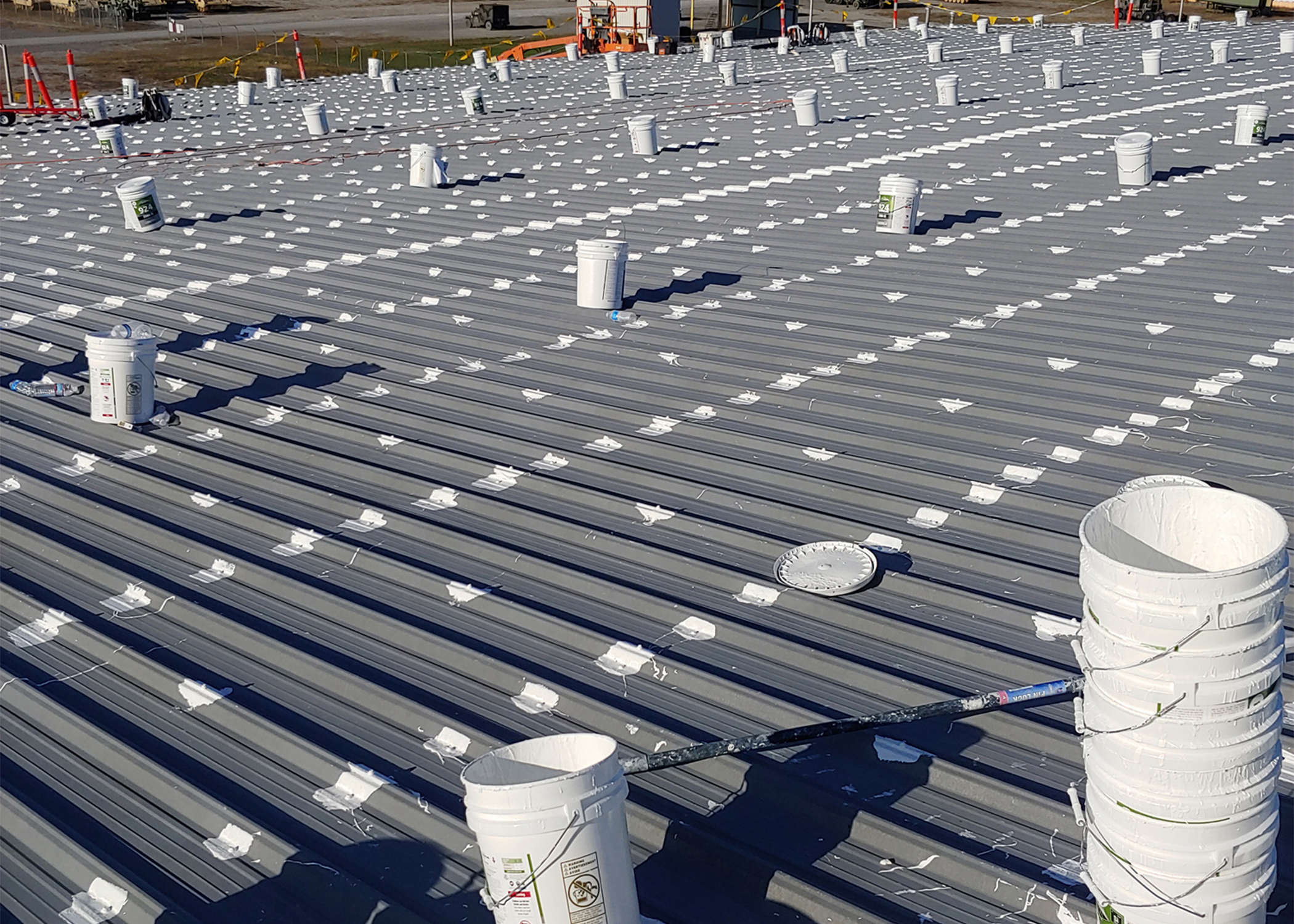
Metal roofing: Standing seam and exposed-fastener metal roofs accept silicone coating for corrosion protection and leak mitigation at fasteners and seams. Metal coating systems use a silicone formulation with a reinforcing fabric at fastener locations and seams. The combination of silicone and embedded fabric at penetrations handles the thermal movement of metal panels without cracking.
The Application Process in Omaha
Surface preparation: Pressure-washing at 3,000-4,000 PSI to remove dirt, biological growth, and loose material. Any standing water from drain blockage is addressed before coating — we clear and test every drain on the roof before the coating crew mobilizes. Seam probing: every linear foot of seam or lap joint on the existing membrane is probed with a rounded tool to identify lifting, delamination, or separation. Failed seams are repaired with compatible repair tape or membrane patching before coating begins.
Primer application: Most silicone systems require a primer coat on the existing substrate before the silicone is applied. Primer improves adhesion, seals minor porosity, and confirms the substrate is in acceptable condition to carry the coating. If a primer coat peels or fails to bond during application, that is diagnostic information about the substrate condition that needs to be addressed before the coating is installed.
Silicone application: Spray-applied in one or two passes to achieve the specified total dry film thickness. Most manufacturer warranty paths require minimum 20-30 mil dry film for a 10-15 year warranty, 30-40 mil for a 20-year warranty. We mil-gauge the wet film during application and pull dry mil readings at closeout to document compliance with the warranty specification.
Temperature and weather windows: Silicone requires surface temperatures above 40°F and below 120°F during application, with no rain forecast within 24-48 hours after application. In Omaha, this means coating season runs April through October reliably, with November and March dependent on weather windows. Nebraska's afternoon convective storms in summer require morning application windows — we do not start a coating day when afternoon thunderstorm probability is above 40%.
Silicone Coating Economics on Omaha Commercial Roofs
A silicone coating with a 20-year manufacturer warranty typically costs $3-6 per square foot installed, depending on the substrate, the specified mil thickness, and the extent of seam repair and surface preparation required. A full TPO replacement on the same building runs $8-14 per square foot. For a building with a sound existing membrane that is 10-15 years into its service life — past its original manufacturer warranty but structurally intact — silicone coating at half the replacement cost and a new 20-year warranty is strong capital math.
The calculation breaks down when the substrate is not sound. A silicone coating applied over a membrane with saturated insulation, failing seams, or a deteriorating deck will fail in years, not decades — the owner has spent $3-6 per square foot and delayed the replacement without avoiding it. We run this analysis honestly on every building we assess: if the substrate cannot support the warranty, we tell the owner the coating does not make economic sense and what the replacement scope looks like instead.
Frequently asked questions
Will silicone coating fix my Omaha roof's ponding water problem?
Silicone is the right coating for a roof with ponding water because, unlike acrylics, it does not degrade in standing water. But coating does not fix the drainage problem — it just tolerates the ponding better than alternatives. If ponding is extensive, we assess the drain layout and recommend tapered insulation or drain additions alongside the coating, because chronic deep ponding eventually creates structural loading issues regardless of what membrane is on the roof.
How long does a silicone coating installation take?
For a typical 20,000-40,000 sq ft commercial flat roof in Omaha: 1-2 days of surface preparation, 1-2 days of silicone application. Total project duration from mobilization to closeout is typically 4-7 days, weather-dependent. Afternoon convective storm seasons in June-August can extend the timeline if morning application windows are lost to weather.
Can silicone coating be applied over a previous silicone coating?
Yes. Silicone bonds well to cured silicone — this is one of the advantages over acrylic coatings, which do not bond reliably to existing silicone surfaces. A roof coated with silicone 10-15 years ago can be recoated to restore or extend the warranty, provided the existing coating is still adhered and the substrate below is sound. We probe and pull the existing coating at representative locations during assessment to confirm adhesion before a recoat scope is recommended.
Is your Omaha roof a silicone coating candidate?
We will walk the roof, probe the seams, and tell you honestly whether the substrate supports a warranted coating — and what the coating versus replacement economics look like for your building.
Ready to talk through a roof?
Tell us about the building and the roof problem. We'll document it and put a plan in writing — with an honest repair-vs-replace recommendation and no upsell pressure.