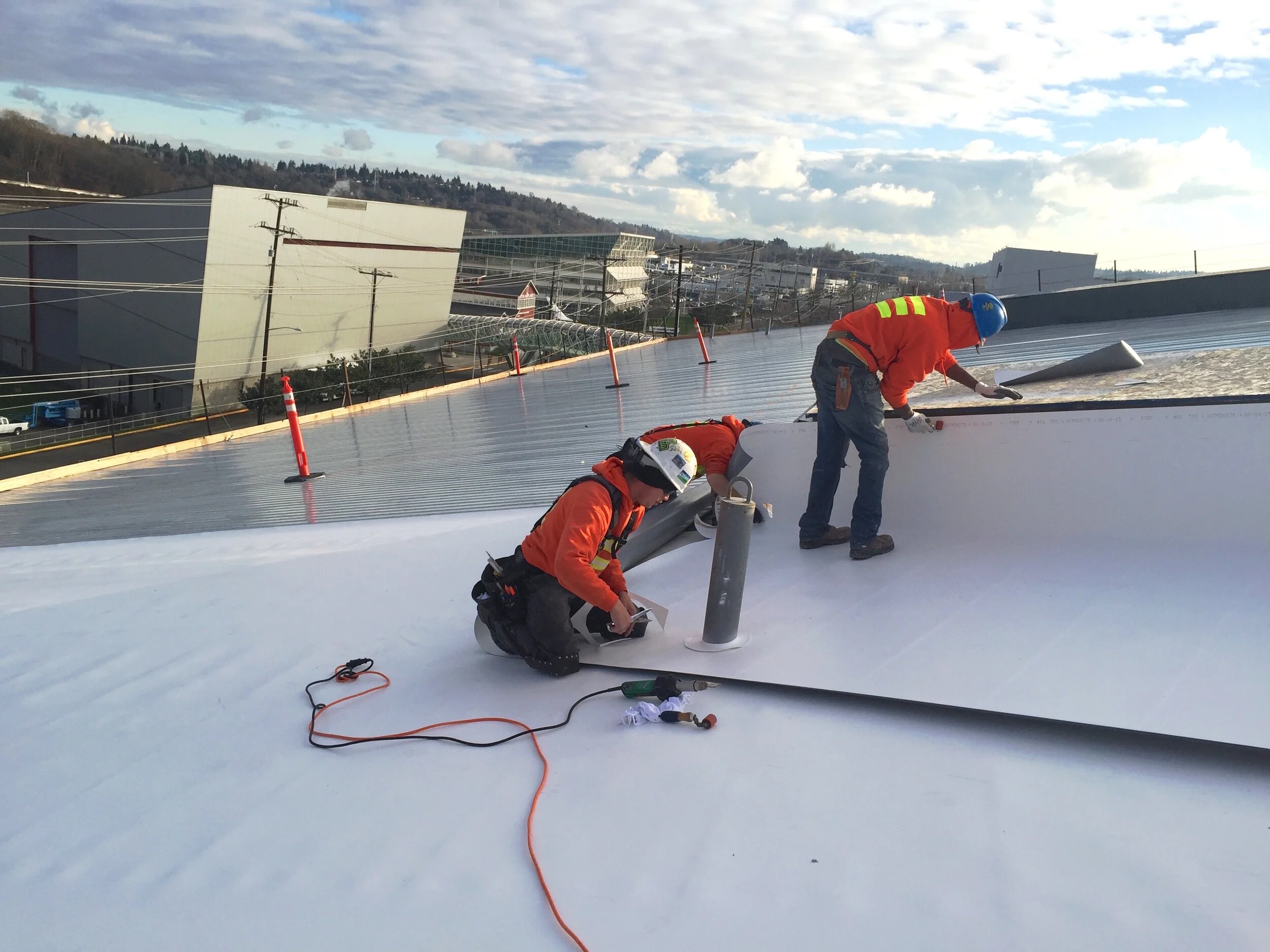
Single-ply membrane systems — TPO, EPDM, and PVC — cover the majority of new and replaced commercial flat roofs in Omaha. They carry the longest available manufacturer warranties, are engineered for Nebraska's freeze-thaw envelope, and are the right choice for most commercial buildings in the metro.
Single-ply commercial roofing dominates new construction and replacement work in the Omaha metro. The three primary systems — TPO (thermoplastic polyolefin), EPDM (ethylene propylene diene monomer), and PVC (polyvinyl chloride) — cover distinct market segments and carry distinct performance profiles. The right specification depends on the building's use, the chemical or thermal exposure on the roof surface, the wind-uplift requirement, the warranty term the owner wants, and the building's position in the Omaha metro's varied wind-exposure geography.
Single-ply membranes replaced built-up roofing as the dominant commercial flat roof system in Omaha through the 1990s and 2000s because they install faster, require less skilled labor to install to a consistent quality standard, carry longer manufacturer warranties, and in the case of TPO and PVC are significantly more reflective than the dark-surface asphalt systems they replaced. The first wave of single-ply in Omaha — 45-mil TPO and EPDM from the late 1990s — is now at or past its design life. The replacement and recover of that first single-ply generation is the dominant project type in the current Omaha commercial roofing market.
We install all three single-ply systems — TPO, EPDM, and PVC — from every major manufacturer. We are not aligned with any single manufacturer, and we do not spec systems based on inventory or manufacturer incentive programs. We specify what the building requires and the manufacturer that delivers the right warranty path and technical support for the project.
Choosing the Right Single-Ply System for Your Omaha Building
TPO for most commercial office, retail, and light industrial applications: The workhorse specification in the Omaha market. Reflective white surface reduces cooling load. Heat-welded seams. 20-year NDL manufacturer warranty standard from every major manufacturer. The correct choice for the Berkshire Hathaway and Kiewit Plaza corporate campus buildings, the UNMC campus research buildings, and the large office inventory along the Dodge Street corridor from Midtown to West Omaha.
EPDM for heavy industrial and cold-climate priority applications: The preferred specification for Omaha industrial buildings where low-temperature flexibility and mechanical durability under foot traffic are the primary concerns. Longer proven track record in heavy-use environments. The North Omaha distribution buildings near Eppley Airfield and the manufacturing facilities along the I-80 corridor have a strong historical relationship with EPDM — it is the membrane the facility managers on those buildings know and have maintained.
PVC for restaurants, chemical exposure, and food-service: The engineering-correct specification for any Omaha commercial building with grease exhaust on the roof surface, chemical vapor exposure, or food-production requirements. The Old Market restaurant district, the West Dodge Road restaurant corridor, and the ConAgra and food-production buildings on the riverfront are the primary PVC markets in the Omaha metro.
Single-Ply Recover — The Omaha First-Generation Replacement Wave
The late-1990s and early-2000s single-ply roofs across the Omaha metro are now in active recovery or replacement cycles. The 45-mil TPO and EPDM systems installed on the corporate campuses, office parks, and industrial buildings in that era are at or past the end of their designed service life. The dominant project type for the next five years in the Omaha commercial market will be recovering or replacing this first single-ply generation.
Recover versus replace on this inventory follows the same logic as any aging commercial roof: moisture core pulls determine whether the existing insulation is dry (recover path) or saturated (replacement). For first-generation 45-mil TPO systems where the insulation is dry and the deck is sound, a recover with new polyiso insulation, a cover board, and a 60-mil or 80-mil TPO system can add 20 years at 50-60% of full replacement cost. For systems where cores read wet across a significant area — common on buildings near the Missouri River floodplain that saw moisture intrusion during the 2011 and 2019 flood events — full tear-off and replacement is the correct scope.
The Werner Enterprises HQ complex in West Omaha, the First National Bank technology campus, and the large distribution buildings in the Aksarben corridor are representative buildings in this replacement wave — large flat-roof corporate facilities that are hitting first replacement cycles and where the capital decision involves documented assessment, not contractor guesswork.
Single-Ply Warranty — What the Manufacturer Covers
Single-ply manufacturer warranties are structured as NDL (no-dollar-limit) warranties, which cover both materials and labor for repair or replacement if the system fails due to a manufacturer defect or installation issue within the warranty term. The warranty is active only when the installing contractor is factory-certified by the manufacturer, the system is installed to manufacturer specifications, and the building owner maintains documented annual maintenance.
The warranty inspection at closeout — a factory-trained manufacturer's field representative walking the roof and verifying installation quality against manufacturer specifications — is the gate through which the warranty activates. We manage the closeout inspection schedule, produce the documentation the manufacturer requires, and ensure the warranty paperwork is complete and in the building owner's file before the project closes. For large corporate campus accounts — the Mutual of Omaha campus, the UNMC facilities portfolio, the Werner Enterprises HQ — the warranty document is a material business record that affects the building's asset valuation and capital planning.
Frequently asked questions
What is the difference between a single-ply membrane and a built-up roof?
A built-up roof (BUR) is multiple layers of asphalt felt and bitumen applied in sequence on the roof. A single-ply membrane is a single layer of factory-manufactured membrane — TPO, EPDM, or PVC — installed over insulation in a single pass. Single-ply systems install faster, carry longer manufacturer warranties, and in the case of TPO and PVC offer significant reflectivity advantages over dark-surface BUR. Most Omaha commercial buildings built after 1995 are on single-ply systems.
Can single-ply be installed in winter in Omaha?
Partially. Mechanically attached single-ply installation — the most common attachment method in Omaha — can proceed in cold weather down to the membrane manufacturer's minimum installation temperature (typically 40°F for most systems). Fully adhered installation requires substrate temperatures above 40°F for adhesive bond — this limits fully adhered work to the April through October window in most Nebraska winters. We plan single-ply project scheduling around Nebraska's temperature windows, not against them.
Do single-ply roofs hold up to Omaha hail?
60-mil and 80-mil TPO and EPDM systems handle typical Omaha hail — 3/4-inch to 1.5-inch stones — without puncture under standard hail-impact testing. The 1.5 to 2.5-inch hail events that move through Douglas County in significant years can puncture even 60-mil membrane. After any major hail event, we conduct damage assessments to document punctures for insurance purposes and to get repairs on file before the insurance claim window closes.
Single-ply roofing question for your Omaha commercial building?
We will walk the roof, assess the existing system, and give you a written recommendation — new install, recover, or repair — with the right system specification and manufacturer warranty path for your building.
Ready to talk through a roof?
Tell us about the building and the roof problem. We'll document it and put a plan in writing — with an honest repair-vs-replace recommendation and no upsell pressure.