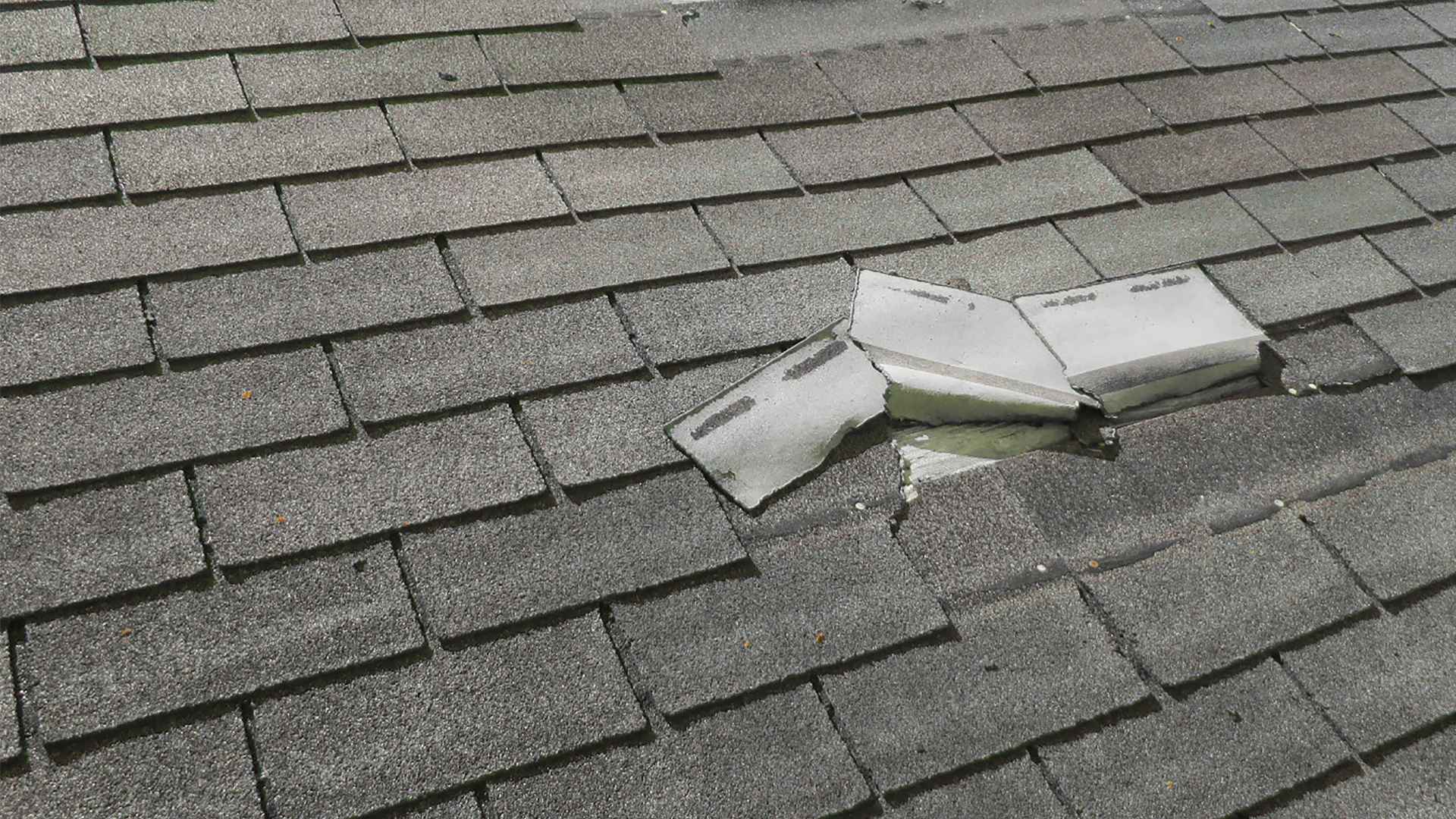
A commercial roof that leaks is annoying. A commercial roof whose deck has deflected past its structural limit is dangerous. We assess structural roof conditions in Omaha — deck deflection, ponding overload, parapet stability, and the loading history from Nebraska's ice storms, derecho events, and Missouri River flood recoveries — and produce written documentation that a structural engineer can work from.
Structural roof damage on Omaha commercial buildings does not usually announce itself with a collapse. It announces itself with a drain that seems to collect more water than it should, a membrane that always ponds in the same place even after the drain was cleaned, a parapet that has started to lean outward at the top, or a deck panel that produces a hollow sound when walked. These early indicators are easy to rationalize — the drain is just slow, the roof has always ponded there, the parapet has been like that for years. Then the next derecho or ice storm adds load to a deck that was already at its limit.
Omaha's weather history creates structural risk in ways that require specific knowledge to assess. The August 2020 derecho applied dynamic wind load to every commercial roof in the metro at a level that exceeded the design wind event for buildings constructed before the 2000s. The Missouri River floods of 2011 and 2019 saturated insulation and foundation assemblies, adding dead load to structures that were not re-evaluated for the new load condition. Ice storm events add temporary structural overload that leaves permanent deflection at drain basins on buildings with marginal structural capacity. We see the cumulative record of these events in the structures we inspect.
Our structural assessment is not a structural engineering report — we are roofing contractors, not licensed structural engineers. Our assessment is a field observation document, produced by project managers trained to identify structural warning indicators, that gives a structural engineer the field data they need to conduct a formal evaluation efficiently. We also know which Nebraska PEs are experienced in commercial roof structural assessment and can facilitate that engagement for building owners who do not have an existing engineering relationship.
Structural Warning Indicators on Omaha Commercial Flat Roofs
Deck deflection: Metal deck panels that have deflected past their design limit show a visible sag between joists. We measure deflection with a straightedge on suspect panels — deflection exceeding L/240 (where L is the span) triggers a structural engineer referral. On pre-1980 commercial buildings in Omaha, particularly the warehouse and light industrial stock in North Omaha and along the I-80 corridor, deck deflection from decades of cyclic load is more common than the building's facility management team typically knows.
Ponding progression: A flat roof that is properly designed drains completely within 24-48 hours of a rain event. A roof with progressive ponding — where the same zone holds water longer with each passing year — indicates that either the drain is losing capacity or the deck is deflecting incrementally and creating a lower catch point. Progressive ponding is a structural stability concern because ponding water creates a load that further deflects the deck, which creates a deeper pond, which adds more load — a positive-feedback failure mode that the Structural Engineering Institute identifies as a critical design consideration for flat roofs.
Parapet lean: Omaha's unreinforced masonry parapets are subject to out-of-plane movement from thermal cycling, moisture intrusion, and the occasional impact from derecho or tornado wind loads. A parapet that has measurable lean toward the exterior — assessed with a plumb bob or digital level — requires structural engineer evaluation before any roof membrane work is performed on or near the parapet. We flag parapet lean on every inspection walk and record the measurement in our report.
Nebraska-Specific Structural Load History
Derecho wind uplift history: The August 2020 derecho applied dynamic wind uplift to commercial roof decks across the metro at levels that exceeded the design standard for pre-2000 construction. Most of these buildings passed visible inspection after the storm — no membrane blow-off, no parapet failures — but the fastener-to-deck connections and deck-to-joist connections may have experienced plastic deformation that reduced their residual capacity. We document derecho history on buildings we assess and include it in the structural assessment narrative for the engineer's review.
Ice storm load history: Omaha's commercial flat roofs have experienced multiple significant ice events in the last twenty years. Each event that approaches or exceeds the design live load leaves residual plastic deformation in the deck. Buildings that experienced the 2009 ice storm, the 2011 ice storm, and the 2019 bomb cyclone snowpack have a cumulative structural load history that the current deck condition may reflect. We measure deck deflection relative to the original design geometry at drain locations — where ponding load is highest — and flag deviations for structural review.
Flood-related dead load: Buildings whose insulation has been saturated by flood events or sustained moisture intrusion are carrying dead loads that were not part of the original design. Polyiso insulation at 5% moisture content weighs approximately the same as the dry product. At 30% moisture content — a level we have measured in flood-affected North Omaha buildings — the insulation dead load doubles. We include insulation moisture content data in structural assessment reports so the structural engineer can evaluate the load condition.
What a Structural Assessment Report Covers
Our structural assessment report is a field observation document, not a structural engineering certification. It covers: roof area and building use, date-of-construction and known load history, observed deck deflection measurements at grid locations, ponding zone mapping with depth measurements, parapet condition with lean measurements at each face, drain infrastructure condition, observation of any visible structural connections above the ceiling plane, and photographs keyed to the observation locations on a zone diagram.
The report is formatted for structural engineer review — the measurements and observations give the PE a field starting point rather than a blank slate. It also serves as a baseline document for capital planning: building owners who know their deck deflection status can plan structural repairs on a capital timeline instead of responding reactively after the deck fails.
We produce structural assessment reports as a standalone service for Omaha commercial building owners and for the property management companies that maintain multi-building portfolios in the metro. Portfolio owners often have buildings in the North Omaha industrial zone and the West Omaha I-680 corridor where derecho and ice storm load history is significant — a systematic structural assessment across the portfolio identifies the buildings at highest risk before the next weather event.
Frequently asked questions
Do you provide a structural engineering report?
No. We are roofing contractors, not licensed structural engineers. Our structural assessment report is a field observation document with measurements and photographs that a licensed structural engineer can use as a starting point for formal evaluation. We refer to licensed Nebraska PEs when the field observations indicate structural concern, and we can coordinate that engagement for building owners without an existing engineering relationship.
When should we get a structural roof assessment versus a standard roof inspection?
A standard inspection covers membrane condition, flashing, drains, and moisture. A structural assessment is appropriate when the building has experienced a significant load event — derecho, ice storm, flood — when progressive ponding has developed, when parapet lean is visible, or when the building is pre-1990 construction and has not had a structural review of the roof in more than ten years.
How much does a structural roof assessment cost for an Omaha commercial building?
Our field observation structural assessment costs vary with building size. A 20,000-square-foot building is typically a half-day field effort with a written report delivered within five business days. Larger portfolio assessments are priced by building count. Call (402-258-5343 for a specific quote on your building.
Structural roof assessment for your Omaha commercial building?
We produce a written field observation report with deck deflection measurements, ponding zone mapping, and parapet condition data — formatted for structural engineer review or capital planning.
Ready to talk through a roof?
Tell us about the building and the roof problem. We'll document it and put a plan in writing — with an honest repair-vs-replace recommendation and no upsell pressure.